Showing posts with label Spanish Imperial Eagle. Show all posts

Friday, 6 October 2017

Algarve autumn

After spending much of the summer in the UK in order to avoid the extreme heat of the Algarve we returned here in September to find that it was still pretty warm.  And so it continues with the temperature rising to 30º C again yesterday and there’s continuing, wall to wall sunshine forecast for at least another week.  Not that we’re complaining, of course, but it isn’t ideal weather for long birding days and it isn’t weather that’s been bringing in many of the scarce or rare migrants that we hope for at this time of year.

Having said all that, we’ve been birding most days since our return and it’s been great.  Mostly we’ve been in the Ria Formosa but there have been days around Castro Verde to see the specialities of that area and we have had a couple of trips to Sagres where raptors and seabirds are the main attractions; we also spent some time with the team from Brewood Ringers who had another very successful visit to the Parque Ambiental de Vilamoura.
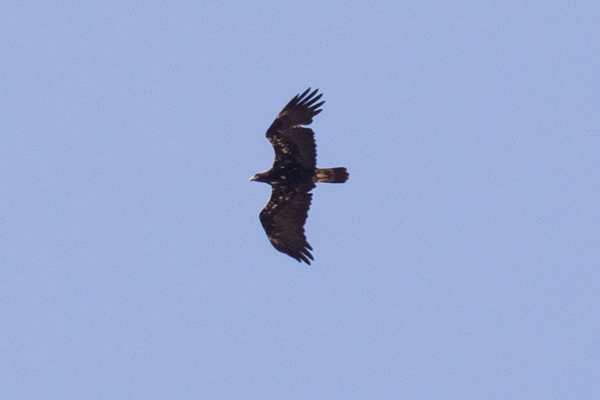
Spanish Imperial Eagle

As always, there’s been lots to see in the Ria Formosa.  It isn’t difficult to find 20 or more shorebird species in a morning around the tidal areas and saltpans and it’s usually possible to see six gull species without too much difficulty.  There was a Pectoral Sandpiper last month and a Red-necked Phalarope but so far nothing more exotic than those.  It’s fair to say that not everyone we take birding shares our enthusiasm for waders and gulls and still we find that Little Bitterns, Black-winged Kites, Western Swamp-hens and Bluethroats are the biggest ‘crowd-pleasers’.

One or two Yellow-browed Warblers have appeared in recent days but rare passerines have otherwise been missing.  In former years the ringers have produced the goods – we remember a Common Yellowthroat, Common Rosefinches, a Paddyfield Warbler and an Aquatic Warbler turning up in mist-nets at Vilamoura in the recent past but this year their success was simply in the actual number of birds they caught and ringed rather than finding rarities – 1903 birds of 56 varieties!  Their efforts once again underline the importance of the Parque Ambiental to a wide selection of migrant species.

 Iberian Green Woodpecker

Common Kestrel

At Sagres we managed to see a reasonable number of raptors but to be honest it would have been nice to view them at closer range.  Some days they come closer to Cabranosa than others and we just haven’t been lucky.  Highlights there so far (and there’s plenty of time left for more) have been two Rüppell’s Vultures and a Lesser Spotted Eagle.  We did get a distant view of the eagle, coincidentally on the same date that we saw a much closer one in 2015.

Highlights among the seabirds have been two Brown Boobies and a Yelkouan Shearwater, both seen from Cape St Vincent.  Whilst there is a nice photograph of the Brown Booby, the shearwater record may not have such an easy passage through the hands of the Rarities Committee.  We went out to sea about nine miles with Mar Ilimitado and on a fairly calm day saw Cory’s, Balearic & Great Shearwaters, European & Wilson’s Storm-petrels, Northern Gannets and just one Great Skua.  Maybe it wasn’t the most productive trip we’ve ever done but it was certainly memorable.  There were close encounters with a Fin Whale, several Striped Dolphins and far more Common Dolphins than we have ever seen before.

 Fin Whale

Common Dolphin

European Storm-petrel

Cory's Shearwater

Five Cory's and one Balearic Shearwater

We continue to read and report inscriptions from colour-rings.  These include the regular rings on Spoonbills and Greater Flamingos but more interestingly we have seen recently a nine year-old Glossy Ibis that was ringed in the Doñana area and which has returned to more or less the exact spot that we saw it in 2010 and 2012.  Also a Slender-billed Gull is back in the same saltpan where we first saw it at this time last year.

Spoonbill (ringed in The Netherlands)

Sunday, 20 September 2015

Last week's birding

We're now settled back into our routine here in the Algarve and we've just  enjoyed an excellent week of birding. Migrants are on the move, it's been a particularly good week to see eagles and there's been much more besides.

Spanish Imperial Eagle

Our two visits to the Castro Verde area in the Baixo Alentejo gave us multiple sightings of Short-toed, Bonelli's, Golden & Spanish Imperial Eagles - enough to make anyone's day!  It would have been nice to have come across the Steppe Eagle that has recently been reported but maybe that was too much to ask for.  Other raptors we did see up there included Black-winged Kites, Griffon Vultures and Eurasian Black Vultures so there were no complaints.

 Short-toed Eagle

As usual at this time of the year, Great Bustards were relatively few and we failed to find any Little Bustards at all.  In an area where hundreds of them nest, there wasn't a White Stork to be seen but we watched a party of seven Black Storks over São Marcos da Ataboeira.  Most of the summer visitors such as Golden Orioles, Collared Pratincoles, Bee-eaters and Rollers have left but a couple of Black-eared Wheatears remained.

After a scorching hot summer the plains are baked dry and for many birds food must be scarce.  Most of the rivers and streams are now dry but there are quite a number of ponds and small reservoirs that still contain some water.  Green Sandpipers and Common Snipe winter around these reservoirs and both species are already in residence. A few passage waders also occur at these waters and we found Dunlin, Common Sandpiper, Greenshank and Ringed Plover.  We also saw Greater Flamingos and Spoonbills which somehow seem a little out of place here away from the coastal wetlands.

 Spoonbills

The eagles we saw in the Algarve were of course Booted Eagles, several of them at a regular site with two Black-winged Kites roosting nearby.  At Quinta do Lago, Little Bitterns, Glossy Ibises and Purple Swamp-hens were easy to see and a Water Rail made a brief appearance.  At Santa Luzia a juvenile Red-necked Phalarope brought to 25 the number of wader species recorded during the week; Audouin's & Slender-billed Gulls were also there.  At Olhão there were Mediterranean Gulls plus Caspian, Little, Common & Sandwich Terns and near Tavira we found what is presumed to be a hybrid Little x Western Reef Egret, a bird that has been in the area for several weeks.

  Booted Eagle

 Audouin's Gull

Red-necked Phalarope

Presumed hybrid Little x Western Reef Egret

An adult Spanish Imperial Eagle was our main reward for making the long trip to the Doñana area in neighbouring Spain.  There were also several Booted Eagles.  Again here it was a matter of finding some water in order to find a few birds as the whole place was parched dry and unrecognisable compared to how we see it in the spring and early summer. A few Black Storks, Great Egrets and Night Herons were seen as well as numerous Grey Herons, Cattle & Little Egrets but apart from Green Sandpipers and Black-winged Stilts there few waders and the day was generally disappointing.


Spanish Imperial Eagle

Everywhere we have been there have been at least a few passerine migrants, including Common Whitethroat, Northern Wheatears, Whinchats, Tawny Pipits, Pied  & Spotted Flycatchers, Chiffchaffs, Willow & Subalpine Warblers and Common Redstarts and we can expect more of the same during the coming weeks.  Maybe this will be the year for another North American passerine - we can but hope!

 Tawny Pipit

Whinchat

Saturday, 29 December 2012

Alentejo Day

Yesterday we decided to spend one of our last birding days of the year in the Alentejo.  Our intention was to explore some areas that we don’t often get to and maybe find places that might be worth visiting in future to bring some variety to our regular trips into the area.

It was still early when we crossed the Ribeira do Vascão that forms the border between the Algarve and the Baixo Alentejo.  And it was cold!  And, worse still, it was foggy!

An hour or more later, it was still fairly murky when we encountered the first of the day’s notable birds, two Spanish Imperial Eagles (Spimps as we call them), presumably a pair.  The difference in size between the two of them was immediately obvious, as was their behaviour; the larger female quickly took flight but the male seemed quite relaxed and waited several minutes before joining her, giving us chance to grab a few photographs as it remained perched on a power pole.


Spanish Imperial Eagle is one of the world’s rarest raptor species but the frequency with which we see them in the Alentejo has increased to the point where we now come away disappointed if we don’t come across them.  In 1974 the population had fallen to only about 50 pairs (all in Spain) and the outlook was grim but since then there has been a remarkable recovery with more than 250 territories now occupied.  This increase has seen the birds re-colonise Portugal and several pairs are now reported to be breeding here with others wandering across the border in the autumn from the species’ stronghold in Extremadura.

The Species action plan for the Spanish Imperial Eagle commissioned by the European Union has as its goal the restoration of the population to a favourable conservation status; its target is to ensure a stable or increasing population of at least 1,000 mature individuals by 2018.  It would be marvellous to think that could be achieved.

Our objectives for the day were certainly met as we climbed to a new (for us) raptor watchpoint, located the site of a Lesser Kestrel colony that will give us another option for seeing these birds when they return and finally looked in more detail at an area that we regularly pass through where we have often seen Golden Eagles.

Bustard country

It was a busy day during which the weather slowly improved and by lunchtime it was bright and sunny.  We also looked around some of our regular haunts and saw plenty of Great Bustards, Little Bustards, Common Cranes and Black-bellied Sandgrouse as well as a sprinkling of the usual raptors, which, incidentally, included a third Spanish Imperial Eagle.

We very much enjoy the wetlands of the Ria Formosa with their Greater Flamingos, waders and gulls but it's very nice to have the wide open spaces of the Alentejo as an alternative for a day out within easy reach of our base in Tavira.
    

Monday, 22 October 2012

Recent highlights...

So what exactly constitutes a highlight?  Well, the Aquatic Warbler that was ringed at Vilamoura on 12th October was the first of that species in the Algarve since 2005, it was the first that either of us had seen in Portugal and it was the first that June had seen anywhere.  That was probably enough to make it the highlight of that day and possibly also the highlight of the month!

Aquatic Warbler

Very often at the end of a day’s birding one of us will ask the question: what was your bird of the day?  The answers are sometimes surprising but just as often there will be a standout candidate that we agree on.  Maybe it will be that we have witnessed some unusual behaviour.  Sometimes it will be a common bird that we have seen somewhere unexpected or out of season.  Occasionally it will be a single bird that has brightened an otherwise mundane day.  Frequently it will be a bird that has given particular pleasure to someone who has been with us, maybe a bird that we ourselves take for granted.

An example in the last few days would be the single female Great Bustard that we eventually found in the Castro Verde area at 5.30pm in the late afternoon after searching all day.  Great Bustards can be difficult to find at this time of the year and on a day when it seemed that every farmer in the Baixo Alentejo was out ploughing and there was disturbance everywhere, it seemed that our 100% record in finding this species was in serious danger.  The bird that saved our bacon was definitely a candidate for ‘bird of the day’.

If that Great Bustard was ‘bird of the day’, then ‘species of the day’ was definitely Spanish Imperial Eagle.  Never have we seen quite so many of them!  Although, to be fair, we don’t know how many different individuals we saw.  On at least five occasions during the day, we got out of the car and looked up to see two or sometimes even three of these magnificent birds.  We were often able to watch them for several minutes and on one occasion were close enough to hear the harsh, barking call of one.

Spanish Imperial Eagle

Recently we spent a day doing survey work for the Atlas of Wintering & Migratory Birds.  We always say that Atlas work gets us into areas where we probably wouldn’t otherwise go and that’s true.  Unfortunately, that’s not necessarily a good thing!  We were out all day, visited six widely separated tetrads and saw no more than about 35 species in total.  Eventually, we got to some water where we found as many as five Green Sandpipers.  After counting so many Corn Buntings and Azure-winged Magpies, Green Sandpipers were definitely that day’s highlight even if we do see them most days at this time of year.

Green Sandpiper

Purple Swamp-hens are common at several sites here and hard to miss at Quinta do Lago.  Finding them here in the Eastern Algarve is a different story!  We have about half a dozen sites east of Tavira where we have seen them but few are reliable and easily accessible.  So it’s been good these last couple of weeks to have one that has been easy to get to and co-operative.  When you rely on being able to show birds to people, these things are important!

Purple Swamp-hen

On several occasions, at the same site, we have also seen one or more Ferruginous Ducks, a species unusual enough in these parts to be a highlight some days, whereas it probably wouldn’t be if seen at one of the more regular sites such as the Parque Ambiental de Vilamoura.

Ferruginous Duck

Little Bittern is a species that we have seen in every month of the year at Quinta do Lago.  Sometimes they are hard to find, sometimes they are hard to miss but always they are popular.  This one posed for several minutes in front of the hide, illuminated by perfect late afternoon sunshine, and brought real pleasure to those few who were there to enjoy it.

Little Bittern

In the category of unusual behaviour, we recently watched a Black-winged Kite that was apparently ‘fly-catching’, making short flights from the top of a small dead tree presumably to take dragonflies or similar before returning each time to the same perch, much in the manner of a Spotted Flycatcher.  It continued like this for all of ten minutes.  We are seeing Black-winged Kites with increasing frequency but can’t recall seeing this feeding method before.

Currently we have a reasonably reliable Water Rail that we can sometimes to show to people and several Bluethroats are now established in winter territories around Tavira.  Any one of these birds that performs when required is potentially the day’s highlight!
 
Bluethroat

Friday, 16 March 2012

Bustards, Raptors and Lots More

Yesterday we drove just a short way north for another great day in the Baixo Alentejo. It was mostly cloudy and a stiff breeze made it quite chilly at times, so from a weather point of view it could have been better but the birding was excellent.

Our aim, as usual, was to get good views of as many of the areas special birds as possible rather than go for a long list but we still managed to record 77 species during the day. Inevitably, some of them, for instance Quail and Wren, were only heard.

Great Bustard is of course the ‘flagship species’ of the Castro Verde area and at this time of year they’re not difficult to find. We saw about 120 of them during the day. Little Bustards, although more numerous in the area, are much more difficult to see but although we managed only a handful there were some good views.

Little Bustard

There were plenty of raptors as usual. Not only did we see 10 species but we saw all of them very well - Marsh, Hen and Montagu’s Harriers, Red, Black and Black-winged Kites, Short-toed and Spanish Imperial Eagles and both Common and Lesser Kestrels. It was a particularly good day for Spanish Imperial Eagles; twice in the morning we saw two birds together and later three birds gave great views. We saw them from below, we saw one sitting on a fence post and, when we were on top of a small hill we even looked down and saw them from above! It’s hard to say how many different birds were involved in our three sightings; they were some distance apart but it seems unlikely that we saw seven birds.

Red Kite

Although the extensive grasslands were the main focus of attention, the area does have a number of lakes/reservoirs and small ponds. As a result, we saw quite a number of species that most people probably associate more with the Ria Formosa rather than the Baixo Alentejo. Most notable amongst these and a surprise even to us were three Greater Flamingos which looked completely out of place. Others at the same location included Spoonbills, Common and Spotted Redshanks, Greenshank, Northern Pintail, lots of Northern Shoveler and Gadwall and even a female Red-crested Pochard.

Many White Storks appear now to be sitting on eggs but there are still lots of them in the fields and there was one point in the afternoon when we were able to look around us and count 70 birds!

White Stork

Corn Bunting

But the day wasn’t just about the big birds. Corn Buntings are now singing from every roadside fence and we lost count of the Southern Grey Shrikes! We were also quite taken with a Water Pipit that was well into its pink summer dress, a common enough bird but looking very smart indeed. Great Spotted Cuckoos were also among the day’s more popular species, but maybe that's just because of how English people feel about the Common Magpies in whose nests they lay their eggs!

Wednesday, 7 April 2010

Another Alentejo Day

With Peter just back here after his tour in Costa Rica, still jet-lagged and not really knowing whether he should be looking for bustards or becards, we spent today in the Castro Verde area.

A day that started cloudy and quite cool soon warmed up and by late morning we were enjoying the sunshine. Birds seen included Great Bustards (80+), Little Bustards (30+), Black-bellied Sandgrouse (28), Great Spotted Cuckoo, Blue Rock Thrush, Black-eared Wheatear, Lesser Kestrels, Black Kite, Red Kite, Black-winged Kite, countless Montagu's Harriers and Calandra Larks. The highspot of the day came when we found ourselves watching five Griffon Vultures and four Black Vultures at a carcass with a Spanish Imperial Eagle circling overhead. Earlier we had watched the eagle apparently playing with some prey item that it repeatedly dropped from on high and somehow managed to swoop down and catch again before it reached the ground.

As if the birds weren't enough, the whole area is a mass of colourful flowers. All in all a great day!


Black Vulture

Friday, 5 March 2010

Another Alentejo Day!

For the second time this week we spent the day in the Castro Verde area. No two days up there are ever the same and today, in spite of some pretty unfriendly weather, we saw several species that we didn’t find on Tuesday and we also saw a lot more Great Bustards.

With 100% cloud cover, a strong wind blowing and occasional rain, it wasn’t a day when we would have expected to find many raptors flying. However, we finished up seeing four Short-toed Eagles, a Golden Eagle, a Spanish Imperial Eagle, a probable Booted Eagle, four Black-winged Kites, a Red Kite, three Montagu’s Harriers, six or more Lesser Kestrels, a couple of Common Kestrels and two Common Buzzards!

Some days we can struggle to find Great Bustards and Little Bustards. Today wasn’t one of those days! And we had reasonably close views of both although the largest group of Great Bustards (48 birds) was some distance away and we definitely needed a telescope to see them. In total we reckon we saw 108 Great Bustards and 14 Little Bustards.

The day’s bird list also included Stone-curlew, Green Sandpiper, Calandra Lark, Wood Lark and Thekla Lark, all of them species we not only like to see but particularly enjoy hearing.

All in all, quite a successful day but wouldn't some sunshine have been nice!

Saturday, 13 June 2009

Rabbits, frogs and a few birds

Did you know that although it has been widely introduced elsewhere in the world, the European Rabbit is native to only Spain and Portugal where its numbers have been severely depleted by disease? In Portugal it is now classified as "Near Threatened" while in Spain it has been classified as "Vulnerable". This matters particularly to two highly dependent predators: the Iberian Lynx and the Spanish Imperial Eagle both of which have suffered population declines that can in part at least be traced to the introduction of myxomatosis in the 1950s and rabbit hemorrhagic virus in 1989. As a result, conservation measures are being taken in both countries to help the Rabbit, although you can, of course, still go out hunting them twice a week!

This individual came to drink three times this morning while we were trying to photograph birds, each time following the same route to the water's edge. We especially liked this photo of it licking its lips.

We were also distracted today by numerous, very vocal Iberian Water Frogs and sundry dragonflies.

Iberian Water Frog

Emperor Dragonfly

Crested Tit, Dartford Warbler, European Bee-eater and Hawfinch were among the birds seen during the three hours or so we spent baking in our hide. Goldfinch, Crested Lark and Eurasian Collared Dove were the ones we photographed!

European Goldfinch

Saturday, 4 April 2009

Spanish Imperial Eagles

As already reported, we saw Spanish Imperial Eagles again yesterday. We have been seeing them regularly in the Baixo Alentejo for quite a while now but, make no mistake, these are really rare birds. BirdLife International, the global Partnership of conservation organisations, estimates the total population at 300-400 individuals, which is a significant increase compared with 30 years ago, but it is still classified as Vulnerable on the IUCN Red List. Almost all of these birds are in Spain with just a handful in Portugal.

Successful breeding took place in Portugal in 2008 for the first time in many years and the species looks to be attempting re-colonisation of areas from which it disappeared in the 1970s. However, it has a battle on its hands. Threats to the species include habitat loss and fragmentation resulting from deforestation for agriculture and timber; juveniles are frequently killed in collisions with power lines; rabbits form a significant proportion of their diet and declines in rabbit populations as a result of viral haemorrhagic disease are thought to have an important effect. However, believe it or not, even in 2009, it is hunters who appear to pose the greatest threat!

The report early last month that the adult male of the successful breeding pair had been found dead from a gunshot wound was enough to make us despair. Apparently, the circumstances were such that the killing could only have been deliberate and pre-meditated with no case even for mistaken identity. The bird’s body was found close to the nest site. It had been shot at close range.

There has naturally been an outcry here with newspaper reports, statements from SPEA and others, the police are involved and there are calls not only for those responsible to be found and punished but for changes in the law relating to hunting zones and for education programmes to be introduced with a view to trying to prevent any repetition of this crime. However, this depressing event is a reminder of why it is that Spanish Imperial Eagles have so long been absent from Portugal: persecution by the hunting fraternity. And do we think that Spanish Imperial Eagles are the only birds of prey targeted by these people? No!

Birdy Castro Verde

Yesterday we were in the area around Castro Verde with a familiar list of target species. It was a bright and sunny day but a wind coming mostly from the north had some of us wearing three layers of clothing early on.

Our birding began in impressive style. Not far from Castro Verde, we stopped the car and jumped out when a male Montagu's Harrier was spotted. We had a decent enough view and it soon went on its way but within minutes we had also seen several Great Bustards, Little Bustards, Lesser Kestrels, Red Kites and Calandra Larks, not to mention a couple of Common Buzzards and two Little Owls! All these without walking away from the car - not a bad start!

Later we saw lots more Montagu's Harriers. On several occasions there were as many as six in the air together and we just sat and watched their marvellous sky-dancing displays. There were plenty of Great Bustards to be seen also, maybe 100 in total during the day. As usual, Little Bustards were less conspicuous but we did have two fly up from beside the car at one place that we stopped. This was the same spot from which we had managed to see a Spanish Imperial Eagle on three separate occasions in March. Well, it happened again! Not surprisingly, we never now drive past this little pull-in area. Soon after we flushed the Little Bustards we were watching Griffon Vultures rising on the warming air and then an immature Spanish Imperial Eagle came into view. It wasn't as close as we have seen it on some previous occasions but close enough.

Later we saw more Spanish Imperial Eagles (probably including the bird seen earlier) at another 'hotspot' not very far away. That was just after we had seen Black-bellied Sandgrouse there and before we found a pair of Stone-curlews! It was that sort of day. By the time we headed for home, we had seen about 70 species.

It would be a shame not to mention the White Storks' nests that are such a feature of this area. We haven't counted them but there must be 50 or more nests between Castro Verde and Mértola, most of them on poles along the roadside. The bill-clattering display of these birds was a sound we heard regularly during the day. Many of their huge nests are tenanted by Spanish Sparrows - but don't you think they and the Imperial Eagles should be Iberian rather than Spanish?

Monday, 9 March 2009

Alentejo - again

Yesterday was another long day out in the Alentejo. We visited many of the same areas that we went to on Saturday and saw most, but not all, of the same birds. Once again there were several good views of both Great and Little Bustards, including a flock of 66 Little Bustards; Black-bellied Sandgrouse were easily found and two Common Cranes still remain. In as much as we saw fewer species, it wasn’t such a good day for raptors but what we might have lacked in quantity we made up for with quality - excellent views of Spanish Imperial Eagle, Lesser Kestrel and Short-toed Eagle, the latter perched on the top of a tree above our regular lunch site. A Great Spotted Cuckoo was a popular choice as ’bird of the day’ but a Black Stork soaring with Red Kites against a background of clear blue sky took some beating.

Sunday, 21 December 2008

Sevilla

We’re just back from Spain. We were there with five representatives of other birding tour companies (two Brits, three Dutch) and a Spanish photo-journalist for a four-night stay at the invitation of Turismo de Doñana. From our point of view the object of the trip was to see parts of Sevilla province that we hadn’t visited previously and to find out more about those areas with which we are already reasonably familiar and perhaps learn about some new birding sites.

After spending the first night in El Pedroso, north of Sevilla, we spent much of the first day touring the Parque Natural de la Sierra Norte de Sevilla, a pleasant enough area of smooth, rounded hills with woods of stone pines and oaks and crossed by several rivers. Although we did see an immature Spanish Imperial Eagle, the truth is that we didn’t have a great day’s birding, spending too much time in the minivan as we tried to cover a huge amount of countryside. However, the bird list we were given suggests that it might be a very worthwhile area to explore in the spring and summer when Booted and Short-toed Eagles, Black, Griffon and Egyptian Vultures, Montagu’s Harriers, Black-shouldered Kites and Black Storks are all possible.

Our second day was spent in two areas to the south and east of Sevilla. We began by driving to Coripe where on a really cold and frosty morning began a walk of 6km along the Via Verde, a disused railway track that actually took us just a short way out of Sevilla province into Cádiz province. In spite of the temperature this was a most enjoyable walk that produced plenty of birds, including Hawfinch and Cirl Bunting before we reached Peñón de Zaframagón Interpretation Centre and Ornithological Observatory. Here is one of the largest colonies of Griffon Vultures in Europe. Apart from the vultures themselves, the main feature here is a remotely-sited digital video camera with a 300mm lens that allows real-time images of the birds and their nests to be seen on a screen inside the Centre. Bonelli’s Eagles also breed here and we were able to watch some wonderful footage taken earlier in the year of a pair of eagles bathing. No Bonelli’s Eagles to be seen now, unfortunately.

From here we went north to La Lantejuela where on the extensive plains that surround the village we were taken to see a flock of about 30 Great Bustards. Also in the same area we saw Stone Curlews and several of the common raptor species. At the edge of the village itself we had a brief visit in rapidly fading light to a complex of sewage and water treatment lagoons. There were Little and Black-necked Grebes here and a selection of the common duck species but it looked like a place that could be very productive at another time of the year. White-headed Ducks are said to breed here.

Our last full day was spent around the eastern side of Doñana National Park, including a stop at the Jose Antonio Valverde Visitor Centre. This was mostly familiar territory for us and it came as no surprise to see Greater Flamingos, Spoonbills, White-headed Ducks, Red-knobbed Coots, Purple Swamp-hen, Little Bustard, Common Cranes, Black-crowned Night Herons and countless raptors. A gathering of about 2000 White Storks was quite a sight and with them were Glossy Ibises, Wood Sandpipers and about a dozen Yellow Wagtails. We spent the last hour or so of the day in the Aznalcázar pinewoods in the hope if not with any real expectation of seeing a Spanish Lynx. Our consolation was standing in the dark listening to Tawny, Long-eared and Eagle Owls, all calling at the same time. This just after actually seeing a Little Owl!

Common Kestrel

On Saturday morning, after a short return visit to the pinewoods, we were taken to the FIBES Exhibition Centre in Sevilla to visit Sevilla Son Sus Pueblos, an event promoting tourism in Sevilla province. Sometimes the more formal segments of trips like this, when we have to leave our binoculars behind, can be a bit of a chore but this was definitely an exception. There was a workshop and an opportunity to discuss some of the issues involved in attracting birdwatching tourism to Sevilla; afterwards we enjoyed looking at the many stands on which the small towns and villages surrounding the city displayed their individual attractions.

All in all it was an excellent opportunity to see quite a few places that we might not otherwise have visited. We also renewed existing friendships and enjoyed great hospitality in some very nice hotels and restaurants. Many thanks to all at Turismo de Doñana and especially to Sergio and Manolo, our driver/guides.

Monday, 1 December 2008

Target birding

Today we were target birding in the Alentejo with visitors from Germany. Their wish list contained just three species: Little Bustard, Spanish Imperial Eagle and Monk Vulture. Easy, we hear you say! But wait a minute, this is Portugal and it’s December!

The morning was bright and sunny but the wind was cold and birding from the car suited everyone. Raptors were the first to grab our attention; a Common Buzzard, a Black-shouldered Kite, a Red Kite and then more of the same. Then we came across our first Great Bustards, two of them and much closer to the road than we normally expect to see them. Not a bad start, but what about the target species?

We have a regular spot where we go to look for Great Bustards and where we sometimes also see Little Bustards. We drove down the track, stopped and without leaving the car had a good search round the fields to our right. Nothing! Then we saw two Red Kites on the ground and another on a nearby pole. They were perhaps 100 metres away but it looked like they had a carcass or at least food of some description. And then to our left, also on the ground and presumably wanting to share a meal, was an immature Spanish Imperial Eagle. Ravens were also showing interest and it was probably some mobbing from one of these that prompted the eagle to fly. We had quite good views of it on the ground and then in flight - not the Little Bustards we expected here, but one down, two to go!

Further down the track we had reasonably close views of more Great Bustards, a flock of 32. Then in the distance a much larger flock, maybe 50 or more Little Bustards took to the air briefly…and then promptly disappeared completely once they were on the ground again. They were a very long way off and it wasn’t a very convincing view, especially if it’s the first time you’ve seen this species. There was nothing we could do about it, no roads that would take us any nearer, nothing. A near miss!

As we were making to leave, a pale-phase Booted Eagle passed overhead and then another 28 Great Bustards were seen on the way to our regular lunch site on the hill top. It was a bit breezy up there but the view was wonderful and we managed to find some shelter while we enjoyed a sandwich and a cup of coffee. Looking down from this superb vantage point we saw 20 or so Common Cranes in a field to the north and 128 Great Bustards to the south but unusually no raptors were flying.

The afternoon saw the continuation of our search for Little Bustards and again we did see a flock of them in flight but even more distant than the earlier ones and totally unsatisfactory. There were more Great Bustards and three Black-bellied Sandgrouse for our efforts but not much more. By 3.00pm the weather was deteriorating and we were already thinking that we might have to switch to Plan B. But first, let’s try another look in the place where we saw the eagle this morning.

As we stopped the car at the point from which we had seen the Spanish Imperial Eagle earlier, we immediately saw that there was another large bird feeding on the carcass with Red Kites in attendance. Identification was obvious and immediate - it was a Monk Vulture (or Black Vulture as we still like to call them). Through telescopes we could see that it was probably a juvenile bird and eventually we also had brief views of it in flight as it took itself off to a nearby field. Two down, one to go!

Now it was threatening to rain and it really was time to put Plan B into action. This involved driving back to the Algarve via Mértola and trying to find Little Bustards at our regular site, Castro Marim. We arrived there in time to have half an hour or so of decent light remaining and after some searching we did indeed find what appeared at first to be a flock of six Little Bustards. Then a Marsh Harrier came by, the Little Bustards flew…and there were 15 of them.

Game, set and match!

Sunday, 16 November 2008

North to the Alentejo

After days out in the west and to the east, today we travelled north to the Alentejo. The excellent weather continues - although the morning started very cold the temperature rose to around 70° F by mid afternoon.

Soon after leaving Mértola we saw our first Eurasian Griffons, about 15 of them on the ground. It was presumably much too cold at that point for them to think about flying, but later we saw several birds rising on the warm air.

Bustards were among the targets today and we soon found a group of 11 Great Bustards. It was only after we had been watching them for a while that we saw that there were also 20 or more Little Bustards just a short distance from them. When a couple of Black-bellied Sandgrouse flew by we knew we had stopped in the right place! Further on we stopped at our favourite Great Bustard view point and saw another three of these elegant birds. We also saw several more Black-bellied Sandgrouse.

As always in this area raptors were a feature of the day. Common Kestrels, Red Kites and Common Buzzards are numerous but we saw just one Hen Harrier, one Peregrine Falcon and two Black-shouldered Kites. The star bird of the day, however, was a Spanish Imperial Eagle. We saw it first soaring some way off and in fact there may have been two different birds. We could not be 100% sure of our identification as we looked against the light but we were reasonably confident. Later, at our lunch stop not only did we see one much closer but also with the light behind us and having gained some height we were actually looking at it from above. Now there was no doubt what it was!

The road between Mértola and Castro Verde is well know for the many White Stork nests on the roadside telegraph poles. There are stretches of road where there is a nest on just about every pole - or at least there were nests. For some reason during the summer the nests have been removed and when the storks return they are going to be in for a shock. Instead of a bit of gentle nest repair they will need to start nest building from scratch and with no platforms on the poles to help them the likelihood is that they will have problems. Probably they will take to the trees. It will be interesting to see what happens.

Sunday is a hunting day in Portugal and so all day we saw men wearing camouflage gear with dogs and guns. We do wonder, though, whether the disturbance they caused resulted in us seeing more birds. Certainly the bustards and sandgrouse seemed quite mobile and we saw several groups of them in flight.

On the way home we made a brief stop at Altura tank. The light had all but gone but it was clear that the numbers of Mallard, Common Pochard and Eurasian Coot had all increased since our last visit. No doubt we will be there again quite soon.