Showing posts with label Black-winged Stilt. Show all posts

Thursday, 1 March 2018

Thailand...again - 5

An overnight stay in Nakhon Sawan gave us an opportunity to take a boat trip on the lake at Bueng Boraphet.  Last year this trip was one of the highlights of our time in Thailand and we had no hesitation when a repeat was suggested.  It has to be said, however, that this second trip didn’t quite live up to our expectations.  One of the main reasons for this was this year’s much higher water level, which certainly had an effect on bird numbers and distribution.  Another reason was that the boatman was intent on finding for us a Baer’s Pochard that had been seen just a few days earlier.  What was supposed to be a three-hour trip turned into more than four hours and when it finished we had to hurry to meet the check-out time back at the hotel. 

Baer’s Pochard is a rare bird and there is no doubt that we would all have liked to see it but Beung Boraphet is the largest freshwater swamp and lake in central Thailand covering 224 square kilometres (for readers in Staffordshire that’s just about 300 times the size of Belvide Reservoir!).  We would have needed some luck to find it, particularly given the large numbers of Garganey, Lesser Whistling Ducks and other species on the water.  Really, we spent far too much time concentrating on just this one target although the morning’s bird list was still impressive, including Pied & Eastern Marsh Harriers, Black-eared Kite, Pheasant-tailed & Bronze-winged Jacanas, Green & Blue-tailed Bee-eaters and White-throated Kingfisher as well as many long-legged waterbirds.

 Blue-tailed Bee-eater

Oriental Darter

Our next three nights were spent at Ban Bang Home Resort, near the coast on the Gulf of Thailand.  How very different it seemed without the continuous, torrential rain that we experienced there last year.  The same could also be said of the nearby saltpans at Pak Thale and Laem Pak Bia, where we were able to enjoy looking at the thousands of waders without the need to be regularly drying off our binoculars.  The boat trip to the sandspit, which previously had been quite unpleasant, was this time really enjoyable and we were able to get much better views of Malaysian Plover, Chinese Egret, Pacific Reef Egret and the other species that make this short boat ride well worth the effort.

 Ban Bang Home Resort

 Pacific Reef Egret

 Malaysian Plover

Chinese Egret

During our time in this area we identified 38 wader (shorebird) species, including Spoon-billed Sandpiper, Nordmann’s Greenshank, Far Eastern Curlew, Long-toed Stint, Asian Dowitcher and Malaysian Plover.  We also saw White-faced Plover, also known as Swinhoe’s Plover, which (depending on who you ask) may or may not be a separate species from Kentish Plover.  What a treat it was to see a flock of about 1,200 Eurasian Curlews but at the same time be able to watch more than 300 Terek Sandpipers gathering to roost.


Spoon-billed Sandpiper...in the 'scope!

 Great Knot

 Marsh Sandpiper

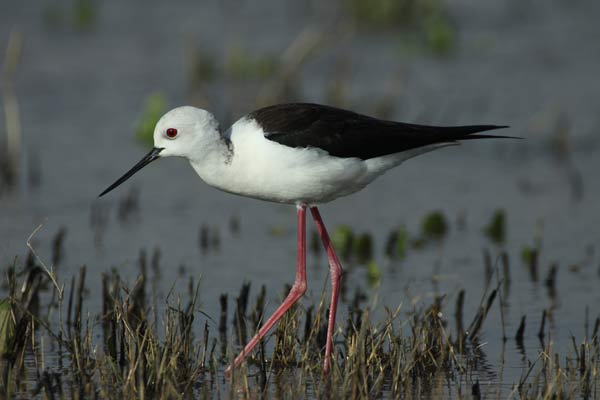
 Black-winged Stilt

Spoon-billed Sandpiper

We also managed to visit several sites that we didn’t get to last year.  Notable was a lake near Wat Takaro where we went to look for Spot-billed Pelican.  We found just one but among the many accompanying ducks we were surprised to find a drake Red-crested Pochard, thought to be only the fifth or sixth record of this species for Thailand.

Unfortunately, all good things must come to an end and we had to head for Bangkok and one last night in Thailand before our flight home.  On the way to the capital we stopped at Nong Pla Lai rice paddies, where Booted, Greater Spotted & Eastern Imperial Eagles and Black-eared, Black-winged & Brahminy Kites were all seen.

 Brahminy Kite

 Black-eared Kite
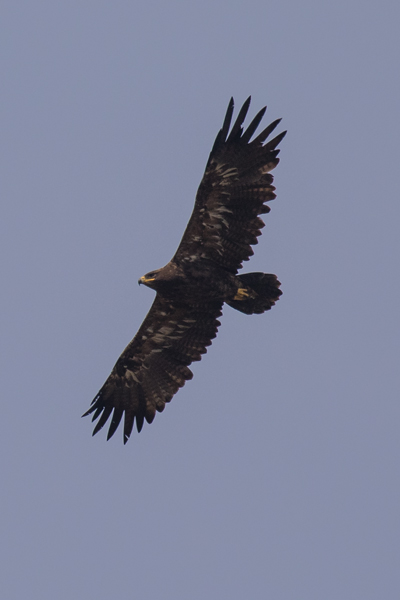
Greater Spotted Eagle

Our flight from Bangkok was an evening departure, which meant that we had plenty of time for birding on our last day.  We went first to Muang Boran Fish Ponds, located on the outskirts of the city but by 8.30 a.m. the heat and humidity were such that we decided to head for the coast and Bang Poo. Here a Slaty-breasted Rail showed well from the hide and among the huge numbers of Brown-headed Gulls and Whiskered Terns present, we were able to find both Black-headed & Slender-billed Gulls both scarce winter visitors.

 Slaty-breasted Rail

Brown-headed & Black-headed Gulls

Will we go again to Thailand?  Possibly – it’s a big country and there are lots more birds to see!  In spite of the dreadful weather early on in both trips and some seriously hard beds, we have really enjoyed most aspects of Thailand, including the food.  Thanks are due to Neil & Pennapa Lawton for arranging it all. 

Sunday, 27 October 2013

That was the week...

We’ve just spent a week with two friends from the UK who are keen and widely travelled birders but making their visit to Portugal.  It was a shame that their arrival coincided with a spell of unsettled weather, including a couple of days of rain, but we did our best to show them why it was that we decided to make our base here in lovely Tavira.

Sunday, 20th
Just a half day around the Tavira and Santa Luzia saltpans where the usual selection of waders included one or two Ruff but the highlight for us was seeing Common Redshank H19 for the first time this autumn.  We have written before here about this Dutch-ringed bird, which was back in its usual spot where it has been seen regularly through the last three winters.
There are lots of Audouin’s Gulls here still and we couldn’t resist jotting down a few ring numbers.


Monday, 21st
A full day in the Castro Verde area saw the best of the week’s weather - warm and sunny with just a gentle breeze.  With persistence and a little luck we were able to find most of the target species, including both Great Bustard and Little Bustard, Spanish Imperial Eagle, Black-bellied Sandgrouse, Griffon Vulture, Black Vulture, Stone-curlew and Calandra Lark.  A Hen Harrier was our first of the season, Red Kite numbers had increased from a week ago but the day’s only Black-winged Kite disappointed by quickly disappearing from view.


Tuesday, 22nd
A dark and dismal morning with persistent rain found us at Castro Marim birding just from the car.  We saw barely 30 species in the hour or so before we saw sense and headed back home!

Wednesday, 23rd
Most of the day was spent around Ludo and Quinta do Lago where early morning raptors included four Booted Eagles, an Osprey, a Marsh Harrier and a Black-winged Kite.  We saw what were probably three different Little Bitterns and as well as the usual Purple Swamp-hens it’s nice that a Water Rail has recently taken to appearing from time to time in front of the hide.  Several Red-crested Pochards, Glossy Ibises and Black-headed Weaver completed the area’s ‘must see’ species.  Two Cetti’s Warblers put on a memorable and uncharacteristic show for us, displaying and chasing about in open view, lots of White Storks were back on their nests, the wooded areas provided Crested Tits, Iberian Green Woodpecker and Great Spotted Woodpecker but for some reason not Short-toed Treecreeper.  Two Common Scoters off Praia de Faro at lunchtime were a bonus.
We rounded off the day back in Tavira where three Bluethroats in view simultaneously could hardly have been bettered.


Thursday, 24th
When the forecast shows wet and windy weather approaching from the west, it’s best to head east!  We went to Doñana for the day and although we didn’t see much sun we did stay dry.
At La Dehesa de Abajo there were fewer birds than we saw on our last visit there two weeks ago mainly because Glossy Ibises and White Storks were mostly absent.  There were still 1,000 or so Greater Flamingos and probably twice that number of Northern Shovelers.  Among the hundreds of Black-winged Stilts, one with a colour-ring obligingly walked past the hide two or three times.  Two Black Terns, two Pallid Swifts and several Red-knobbed Coots were also notable and there were large numbers of hirundines feeding over the water.  After all that we enjoyed an excellent lunch in the visitor centre.
In the afternoon, we headed off to explore other parts of Doñana where the numbers of Marsh Harriers, Great Egrets, Grey Herons and Common Kestrels were particularly impressive.  We saw Griffon Vultures and Calandra Larks, on several occasions we had good views of Black-winged Kites but the highlight was probably seeing four Black Storks at close range, birds that we don‘t often see on the ground in the Algarve.


Friday, 25th
Heavy overnight rain continued into the morning and we decided not to venture out birding until after lunch.  The afternoon was no better; we managed half an hour or so around Tavira, birding from the car but it was no fun and we did the only sensible thing, we packed up and went home.

Saturday, 26th
During a week’s birdwatching tour in the Algarve it would be unprofessional not to go to Sagres, particularly at this time of the year when there is a chance to see some raptors and other migrants.  The weather had improved and we enjoyed a mostly sunny day with very little wind.  Unfortunately, it wasn’t a great birding day - the birds just didn‘t turn up! 
We saw a few Cory’s Shearwaters, a tired-looking Garden Warbler and a Pied Flycatcher, Shags, Rock Doves and Crag Martins and a flock of what must have been 100 or more Red-billed Choughs but the only raptors were a Booted Eagle and a Common Buzzard.


On the way back to Tavira, we called in at Lagoa dos Salgados but it wasn’t a pretty sight.  Work is currently being carried out by Águas do Algarve, which it is said should provide enhanced nesting and feeding areas for birds, enable the water levels to be controlled and generally increase the lagoon's appeal to migrating birds to stop over, rest and feed.  If it sounds too good to be true, then it probably is!  We should remember that the head of  Águas do Algarve is that same person who was previously mayor of Silves council and was instrumental in granting permission to Finalgarve for the tourist development adjacent to the lagoon that has been the subject of an online petition and a complaint to the European Environment Commissioner.

So, that was the week - some very good days, one that was not so good and two that were washed out by the weather.

Sunday, 12 August 2012

Get the habitat right...

It was interesting to see in the August edition of British Birds magazine the report that a pair of Black-winged Stilts had attempted to breed this year in Somerset, news that had previously passed us by.  Of course, Black-winged Stilts are birds that we see every day around Tavira but breeding records in the UK have been very few.  Peter recalls seeing two juvenile birds at Belvide Reservoir in September 1987 that were almost certainly from a successful nest that year in Norfolk and the record books show that way back in 1945, three pairs laid eggs in Nottinghamshire and produced three young.  Sadly this year’s nest was deserted within just a few days of being found, reportedly falling victim to the weather.


Somerset seems to be the place these days for rare breeding birds to try their luck!  After an unsuccessful attempt in 2010, two pairs of Great White Egrets have managed this year to raise young there and it was also in Somerset that Cattle Egrets bred for the first time in Britain in 2008 and where there was the second proved breeding of Little Bitterns in 2010.

The numbers of Great White Egrets occurring in Britain has been increasing steadily in recent years at the same time as the species has been expanding its range elsewhere in Europe.  Breeding also took place for the first time in Germany this year while in Poland, where the first nest was found in 1997, there were reported to be more than 140 nests in 2011.  That the species should also begin colonising Britain is no surprise.  Interestingly, one of the Somerset breeding birds had been colour-ringed in France in 2009.


It was probably only a matter of time before Cattle Egrets also nested in Britain and perhaps surprising that there have been no reports of any further attempts since 2008.  The Cattle Egret has undergone one of the most rapid and wide reaching natural expansions of any bird species and seems able to flourish in the company of domesticated livestock as easily as it originally did with the herds of wild grazing mammals of Africa.  In the twentieth century they expanded to South Africa, Australasia, South America and North America as well as northwards within Europe.   They are birds that we see every day from our window in Tavira as they fly to and from their roost sites. 


The case of Little Bitterns is slightly different.  These are skulking birds that can easily be overlooked and although there is only one record of proved breeding in Britain prior to 2010 (in Yorkshire in 1984), they were strongly suspected of breeding in East Anglia in the nineteenth century and also in southern England in 1947.  Pairs are known to have summered in Surrey (1956), Somerset (1958), Huntingdonshire (1960) and possibly elsewhere.


To be fair, there have been similar breeding successes elsewhere than in Somerset.  After a pair of Purple Herons failed in their attempt to raise young in Suffolk in 2007, there was success for a pair in 2010 at the RSPB reserve at Dungeness in Kent.  Again, there has been a steady increase in the numbers of this species occurring in Britain since the 1970s, most of them turning up in the south east, suggesting that they originate from the Dutch population.


In one or two reports that we have seen of these events, it has been suggested that they have been brought about by climate change, presumably a change that is particularly affecting Somerset!  What is certain is that in Somerset the Avalon Marshes (Ham Wall RSPB reserve and Shapwick Heath National Nature Reserve) now represent one of the most extensive wetlands in Europe and provide just the right habitat for these colonising birds.

An important feature of the Avalon Marshes project has been the creation of reedbeds to encourage Eurasian Bitterns to breed and two nests at Ham Wall in 2008 were the first in Somerset for 40 years.  This has been just a part of a major programme of reedbed restoration and creation over a period of 15 years or more which has brought about a significant increase in the British breeding population of Bitterns.  Once widespread and numerous, Bitterns were in danger of being lost as a breeding bird in Britain mainly as a result of habitat degradation.  Now, as well as in Somerset, they can be heard booming in more than 50 sites around the country with definite breeding in Norfolk, Suffolk, Cambridgeshire, Kent and Yorkshire.

So far the return of Bitterns is a remarkable success story and a demonstration of what targeted conservation action can achieve.  It has had the added benefit of providing conditions suitable not only for colonisers like the Great White Egrets but also for Marsh Harriers, Bearded Tits, Reed Warblers and Sedge Warblers, not to mention mammals, amphibians, fish and a host of insects.

Get the habitat right and the birds will do the rest – it’s simple really!

Saturday, 30 June 2012

Castro Marim

We’ve spent three mornings this week at and around the Reserva Natural do Sapal de Castro Marim e Vila Real de Santo António, which not surprisingly we tend to refer to simply as Castro Marim.  Not only is this one of the most productive birding sites in the Algarve but it also has the attraction for us that it is reasonably close to our base in Tavira and can be reached fairly quickly without incurring road tolls.

It’s getting to be quite warm here now with temperatures rising to 30ºC and higher by mid-morning, so early starts have become an essential part of our routine.  Breakfast has been accompanied by the ‘cut-ock, cut-ock’ song of Red-necked Nightjars and the calls of Little Owls, two birds that get the day list off to a good start before leaving home.


Castro Marim is primarily a wetland area and we have mentioned before that we recently counted almost 1,600 Greater Flamingos there.  We haven’t counted them this week but have no reason to think that there are any fewer than that number.  There is more to the reserve than just saltpans but they are a major attraction and already many Spoonbills and waders are returning, birds that have been north to breed or perhaps have suffered a failed breeding attempt.  Most numerous of these are Black-tailed Godwits but Dunlins, Grey Plovers and Ruddy Turnstones have also been seen and we were particularly pleased to see and hear the return of our favourite, Greenshanks and Green Sandpipers.


The local breeding waders, Kentish Plovers, Avocets, Black-winged Stilts and Stone-curlews all have young, some of them now well-grown.  A month or so ago, we saw a pair of Little Ringed Plovers with young on the reserve and it seems likely that Common Redshank have also nested in the area.


Gulls seen this week have been just the usual Yellow-legged, Slender-billed and Audouin’s.  Little Terns are numerous but it seems that they may not have had much breeding success.  Up to three non-breeding Caspian Terns have remained in the area and a flock of 18 Black Terns passed through on Tuesday.  Sightings of Collared Pratincoles have been popular and several pairs are assumed to be breeding.


We read somewhere in one of the guide books to the Algarve that there are few raptors here other than those seen at Sagres during the autumn period and that seeing anything other than a Common Buzzard or a Common Kestrel could be considered a bonus.  Well, we must have been very lucky this week with seven species seen just at Castro Marim!  A Black-winged Kite near Tavira made eight species.


We are still finding one or two Glossy Ibises in unexpected places and Castro Marim is no exception.  Several Purple Herons are being seen around the reserve which may also be birds displaced from Doñana.

Other highlights of the week at Castro Marim have been a pair of Purple Swamp-hens, singing Golden Orioles, a pair of Spectacled Warblers feeding young, Bee-eaters going backwards and forwards in and out of nest holes, several pairs of White Storks with young, Woodchat Shrikes, Southern Grey Shrikes, Little Bustards and what appeared to be a family party of four Common Ravens.


It is disappointing that ICNB have found it necessary to stop access to the Cerro do Bufo sector of the reserve and we miss doing the circular walk there that was part of our weekly routine.  Still, we have adapted to the change and we hope that visiting birders will also respect the restrictions – there are plenty of birds to be seen without the need to trespass!  

Wednesday, 2 November 2011

Wet in Portugal, Dry in Spain

With a freak storm damaging the terminal building at Faro airport and water up to the tops of our wellies in the street outside, there seems little doubt that summer in the Algarve is truly over. Daytime temperatures which only a short while ago were reaching 25ºC are now struggling to reach 18ºC. No matter what the temperature, putting the clocks back an hour seems to be a signal to our Portuguese friends to change into their winter plumage and no doubt we will soon be joining them.

With so much wind and rain, opportunities for birding have been limited but last weekend we did manage a trip across the border into Spain in the hope of finding some birds to photograph in Doñana. Unfortunately, we came away disappointed. We saw plenty of birds and a reasonable variety of species but because the area is still so very dry we weren’t able to get close enough to anything to even think about pointing a camera. In fact most of the birds we saw were concentrated in just three areas: the Cañada de Rianzuela, the Caño del Guadiamar and the Isla Mayor ricefields. Everywhere else was bone dry and birdless.

Maybe we shouldn’t be disappointed by a day that included seeing nine raptor species (including Spanish Imperial Eagle), thousands of ducks (including Marbled Duck that we just don’t see in the Algarve), Cranes, a flock of maybe 1,000 Black-winged Stilts being terrorised by a Peregrine Falcon and Lesser Short-toed Lark (more difficult to see in the Algarve now since the access restrictions at Castro Marim). But the fact is that by the end of October and after a fair amount of rain we were expecting better of ‘Europe’s most important wetland’. The people we saw at the JAV Centre who were taking the official tour in two of those big green Doñana buses had almost certainly seen fewer birds than we had and seemed to be losing interest.

It’s somewhat ironic that earlier in the week we managed to see, during a fairly leisurely day of photography during which we travelled no more than a couple of kilometres from Tavira town centre, more species than we could find in Doñana. And we had an extra two hours in bed! One of the days perhaps we’ll try for 90 species around the town – it might just be possible.

Meanwhile, the rain has definitely improved conditions for photography here, providing pools of fresh water where waders and gulls come to drink and to bathe. All we need then is some sunshine and off we go...

Ruddy Turnstone

Ringed Plover

Curlew Sandpiper

Little Stint

Common Snipe

Black-winged Stilt

Common Sandpiper

Saturday, 22 October 2011

Slightly Cooler Birding

This week we’ve had only one day in the Castro Verde area; it was another day when finding birds was hard work but which did at least produce reasonable numbers and decent views of both Great and Little Bustards and we saw Spanish Imperial Eagle and Golden Eagle. The Golden Eagle, seen from the roadside through the telescope, perched high on a crag, was probably the day’s highlight.

Otherwise we have been covering our regular sites in the Eastern Algarve: Tavira, Santa Luzia, Ludo and Quinta do Lago. What a pity that Castro Marim is no longer among the places we regularly visit! For the time being, we have also now added to our itinerary the watercress beds near Almancil where we recently found a Pectoral Sandpiper. Could lightning possibly strike twice in the same place?

On both Thursday and Friday we recorded more than 90 species during what were fairly gentle birding days. Although there are signs now that the weather may be about to change (cooler mornings and evenings and a bit more cloud), temperatures throughout the week have risen to a very pleasant 24º C to add to our enjoyment.

Eurasian Spoonbill - one of three Dutch-ringed birds seen this week in Tavira

There have been no real rarities on show other than a Barnacle Goose which we found at Quinta do Lago. Although this species is officially a rarity in Portugal, it was hard to imagine this individual as anything other than an escape from captivity. But who knows? It had no rings and did seem quite wary. Thankfully, it didn’t spook as easily as the two that were in Tavira last Christmas; those two departed in such a hurry that June missed seeing them completely!

Barnacle Goose among the Eurasian Coots at Quinta do Lago

As we have hardly strayed away from the Ria Formosa, it’s not surprising that wetland birds have predominated – waders (24 species), ducks (10), gulls and terns (8), herons, spoonbills and ibises (7) made up more than half of our species total. Among them, only Sacred Ibis might not have been predicted, although we have now seen the same five birds in the same place on three occasions.

Grey Plover - still a smart-looking bird in winter plumage

Slender-billed Gull - easy to see around Tavira

Black-winged Stilt - numerous but always fun to watch

Northern Shoveler - numbers now building up as they arrive from...the north!

Robins, Bluethroats, Chiffchaffs, Song Thrushes, Meadow Pipits, Skylarks and White Wagtails are amongst the species that have now arrived here in numbers to spend the winter. On the other hand, there are fewer Whinchats and Northern Wheatears to be seen and Yellow Wagtails are in short supply. Two Red-rumped Swallows and a single Sand Martin were the only hirundines recorded.

Raptors have continued to provide plenty of interest down at the Sagres end of the Algarve this week with a Pallid Harrier causing particular excitement, but here in the east we have had to be content with just six species: Booted Eagle, Black-winged Kite, Marsh Harrier, Common Buzzard, Common Kestrel and Peregrine Falcon.