Showing posts with label Cattle Egret. Show all posts

Saturday, 21 May 2016

Back into our routine

With Peter now back in the Algarve after his travels for Avian Adventures we have returned this week to our usual routine that includes birding in both the Algarve and Baixo Alentejo, some photography and some reading of colour-rings.

We began on Monday with a trip to the salinas at Olhão where two Red-necked Phalaropes had been seen during the previous few days. This species is classified as a rarity here and is always a delight to see. With good directions we easily found one of them but have to assume that the other one had departed.

 Red-necked Phalarope
Whilst in the Olhão area we called in at Quinta de Marim. This was partly to see our friends at RIAS but also to have a look for a Marbled Duck that had been seen and photographed on the small freshwater pond there. Marbled Duck is a species that many visiting birders want to see and ask us to find for them, presumably not realising what a scarce bird it has become in Iberia. The last record in the Algarve was in January 1997!

Marbled Duck

It used to be that they could be found across the border in Doñana but relatively few remain there and they aren’t easy to find. The breeding population is very small and has undergone a large and rapid decline because of destruction and degradation of breeding habitat. Many of the wetlands in North Africa where they spend the winter have also beeen destroyed.

Marbled Duck

When we found the duck it was quickly obvious that it had a yellow ring on its right leg and this it would seem is evidence that it originates from a Spanish re-introduction project. For more precise details it will be necessary to read the inscription on the ring, something that won’t be easily achieved!

We did hear that there had been a report of two Marbled Ducks at Quinta de Marim, which together with the secretive behaviour of the bird we saw has given rise to speculation that a breeding attempt might be in progress. Now that would be exciting!

A morning out around Tavira with the camera resulted in some pleasing portraits of European Bee-eaters. We also spent some time at a small puddle where Serins and Goldfinches were drinking and bathing and House Martins were collecting mud.

 European Bee-eater

House Martin

We spent a full day in the Castro Verde area where we saw most of the expected species including thirteen raptor species, European Rollers and both Little & Great Bustards. Rufous-tailed Scrub Robins (aka Rufous Bush Chats), Collared Pratincoles, Cattle Egrets and Gull-billed Terns were also getting on with the business of breeding. We also saw four Mute Swans but we’re not sure what they were doing there!
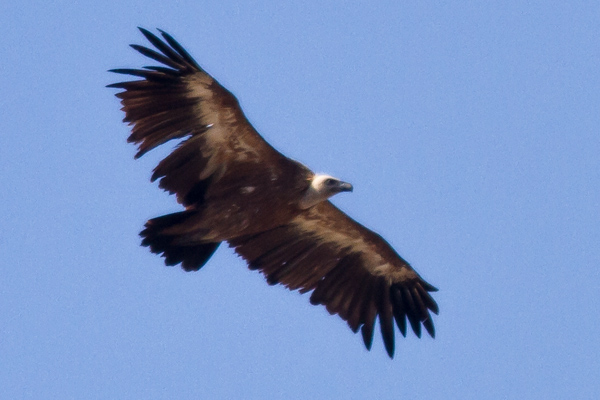
 Eurasian Griffon

 Gull-billed Tern

Rufous-tailed Scrub Robin

Cattle Egret

An enjoyable afternoon was taken up with a visit to the Audouin’s Gull breeding colony in the Ria Formosa. This species began breeding in the Algarve in 2001 and it’s amazing that there are now estimated to be 1,800 pairs here.  Forty years ago the global population was estimated to be only 1,000 pairs! The population has expanded owing to increased availability of fisheries discards close to key breeding colonies, something that could in future be affected by the EU Common Fisheries Policy. We managed to read a few colour-rings including some indicating that the birds originated from the Ebro Delta in Spain, site of the largest colony in the Mediterranean. There is also a substantial breeding colony of Yellow-legged Gulls on the island.

 Audouin's Gull

 Yellow-legged Gulls

Friday, 21 June 2013

The Last Few Weeks...

Can it really be five weeks since Peter returned from China?  Where does the time go?

It’s fair to say that we’ve had one or two distractions and diversions from our normal routine during the past month, some of them planned but others not so.  However, in spite of these there has been plenty of birding to enjoy.

 European Roller

Montagu's Harrier

Visits to the Castro Verde area have been fewer of late.  In contrast to the wonderful display of wildflowers that we were seeing earlier, the landscape is now looking very parched and straw-coloured as crops of hay and cereals have been harvested.  As the breeding season progresses, both species of bustards have become more difficult to see and now Montagu’s Harriers, Lesser Kestrels and Rollers are among the most conspicuous birds as they go looking for food for newly hatched young.  Also regularly seen have been Collared Pratincoles, Calandra Larks and Black-eared Wheatears and the number and variety of raptors has guaranteed regular roadside stops to check them out.

Black-eared Wheatear

In the Algarve, we’ve made only a couple of visits to Ludo and Quinta do Lago and most of our birding has been around Castro Marim.  It’s been very convenient to have several pairs of breeding Collared Pratincoles easily viewable and Little Bustards were also good while they lasted although impossible to find once they stopped displaying.  More often heard than seen have been several pairs of Water Rails.  About 20 Slender-billed Gulls and up to about 10 Caspian Terns have been regular and in the past few days the number and variety of waders has increased with Black-tailed Godwits, Red Knot, Curlew Sandpiper, Sanderling, Turnstone and Dunlin all in smart breeding plumage.  There are waders in the Ria Formosa, too, and Audouin’s Gulls are ever present.

By way of a change, we recently spent a morning just a few kilometres inland from Tavira, sitting in the car by the roadside next to a small river.  The aim was photography but we weren’t very successful!  However, from that one spot we were able to watch a surprising variety of species that included Golden Orioles (a pair with three young), Kingfisher, Bee-eater, Little Ringed Plover, Green Sandpiper, Grey Wagtail, Rock Bunting, Blue Rock Thrush, Turtle Dove, Crested Tit, Long-tailed Tit and Azure-winged Magpie.  Only a Green Sandpiper and a Grey Wagtail came close to performing for the camera on this occasion but when we have time to return to this delightful location we will be hoping to have some more of these birds coming down to the water.

 Grey Wagtail

Green Sandpiper

Earlier this week we popped across the border to Spain, to the Doñana area.  Unfortunately, the White-headed Ducks that June found on her last visit in May were nowhere to be seen but we did see five Red-knobbed Coots, a species that we don’t often find in Portugal.  It was good to see that the visitor centre at the Dehesa de Abajo is now regularly open and we met up there with ‘old friends’ Beltran Ceballos Vázquez and Sergio González who regaled us with stories of the latest sightings of Iberian Lynx.  Huge numbers of Glossy Ibises were a feature of the day with nice views of them nesting at the José Antonio Valverde visitor centre alongside many Cattle Egrets and smaller numbers of Little Egrets, Squacco Herons, Little Bitterns and Black-crowned Night Herons.  Elsewhere there seemed to be plenty of our favourite Purple Herons feeding well-grown young hidden deep in the tamarisks.

 Cattle Egret

Purple Heron

Black-crowned Night Heron

In the Tavira area, the ‘best’ bird we have heard of was one that we didn’t manage to see even though it was apparently around for several days.  It was in the mouth of the harbour and described to us by a non-birder friend as “looking like a penguin”.  Previous reports of penguin-like birds have usually involved pale-fronted immature Great Cormorants but when we eventually saw the photographs, this one proved to be a first-winter Atlantic Puffin, somewhat unexpected at this time of year.  What a pity that we didn’t get a phone call until long after the bird had gone!

Sunday, 12 August 2012

Get the habitat right...

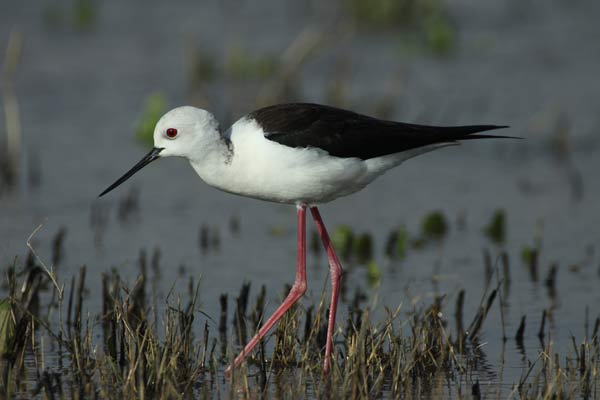
It was interesting to see in the August edition of British Birds magazine the report that a pair of Black-winged Stilts had attempted to breed this year in Somerset, news that had previously passed us by.  Of course, Black-winged Stilts are birds that we see every day around Tavira but breeding records in the UK have been very few.  Peter recalls seeing two juvenile birds at Belvide Reservoir in September 1987 that were almost certainly from a successful nest that year in Norfolk and the record books show that way back in 1945, three pairs laid eggs in Nottinghamshire and produced three young.  Sadly this year’s nest was deserted within just a few days of being found, reportedly falling victim to the weather.


Somerset seems to be the place these days for rare breeding birds to try their luck!  After an unsuccessful attempt in 2010, two pairs of Great White Egrets have managed this year to raise young there and it was also in Somerset that Cattle Egrets bred for the first time in Britain in 2008 and where there was the second proved breeding of Little Bitterns in 2010.

The numbers of Great White Egrets occurring in Britain has been increasing steadily in recent years at the same time as the species has been expanding its range elsewhere in Europe.  Breeding also took place for the first time in Germany this year while in Poland, where the first nest was found in 1997, there were reported to be more than 140 nests in 2011.  That the species should also begin colonising Britain is no surprise.  Interestingly, one of the Somerset breeding birds had been colour-ringed in France in 2009.


It was probably only a matter of time before Cattle Egrets also nested in Britain and perhaps surprising that there have been no reports of any further attempts since 2008.  The Cattle Egret has undergone one of the most rapid and wide reaching natural expansions of any bird species and seems able to flourish in the company of domesticated livestock as easily as it originally did with the herds of wild grazing mammals of Africa.  In the twentieth century they expanded to South Africa, Australasia, South America and North America as well as northwards within Europe.   They are birds that we see every day from our window in Tavira as they fly to and from their roost sites. 


The case of Little Bitterns is slightly different.  These are skulking birds that can easily be overlooked and although there is only one record of proved breeding in Britain prior to 2010 (in Yorkshire in 1984), they were strongly suspected of breeding in East Anglia in the nineteenth century and also in southern England in 1947.  Pairs are known to have summered in Surrey (1956), Somerset (1958), Huntingdonshire (1960) and possibly elsewhere.


To be fair, there have been similar breeding successes elsewhere than in Somerset.  After a pair of Purple Herons failed in their attempt to raise young in Suffolk in 2007, there was success for a pair in 2010 at the RSPB reserve at Dungeness in Kent.  Again, there has been a steady increase in the numbers of this species occurring in Britain since the 1970s, most of them turning up in the south east, suggesting that they originate from the Dutch population.


In one or two reports that we have seen of these events, it has been suggested that they have been brought about by climate change, presumably a change that is particularly affecting Somerset!  What is certain is that in Somerset the Avalon Marshes (Ham Wall RSPB reserve and Shapwick Heath National Nature Reserve) now represent one of the most extensive wetlands in Europe and provide just the right habitat for these colonising birds.

An important feature of the Avalon Marshes project has been the creation of reedbeds to encourage Eurasian Bitterns to breed and two nests at Ham Wall in 2008 were the first in Somerset for 40 years.  This has been just a part of a major programme of reedbed restoration and creation over a period of 15 years or more which has brought about a significant increase in the British breeding population of Bitterns.  Once widespread and numerous, Bitterns were in danger of being lost as a breeding bird in Britain mainly as a result of habitat degradation.  Now, as well as in Somerset, they can be heard booming in more than 50 sites around the country with definite breeding in Norfolk, Suffolk, Cambridgeshire, Kent and Yorkshire.

So far the return of Bitterns is a remarkable success story and a demonstration of what targeted conservation action can achieve.  It has had the added benefit of providing conditions suitable not only for colonisers like the Great White Egrets but also for Marsh Harriers, Bearded Tits, Reed Warblers and Sedge Warblers, not to mention mammals, amphibians, fish and a host of insects.

Get the habitat right and the birds will do the rest – it’s simple really!

Wednesday, 28 July 2010

Staffordshire Rarities

We're currently taking a break from the heat of the Algarve, spending some time in the cool and damp UK! Forecast high temperatures today are 31° in Tavira and 16° in Stafford, so already we're wondering whether we've made the right decision.

Remarkably, our visit to Stafford has coincided with the occurrence of two rare birds locally: an adult Franklin's Gull at Chasewater and a juvenile Cattle Egret at Doxey Marshes Nature Reserve. To have any sort of rare bird in Staffordshire is in itself something of a rarity, so having two here at the same time, and in July, really is unusual.

The Franklin's Gull was seen regularly at Chasewater for more than a week, mostly in the evenings, flying in to roost. Where it was spending its days was anyone's guess. Anyway, it hasn't been seen since Saturday, so has presumably moved on. The only previous record of this species in Staffordshire was at Blithfield Reservoir in August 2006. The Cattle Egret on the other hand, only the third for Staffordshire, seems to have settled in at Doxey.

Doxey Marshes

Of course, Cattle Egrets are very common birds in many parts of the world that we visit regularly. Quite often, in Costa Rica for instance, we have seen them in flocks of hundreds and in Portugal we have only to look out of the window most evenings to see scores of them flying to roost. So why, you may well ask, were we there on Doxey Marshes yesterday evening waiting for a very brief view of just a single bird flying across the reserve? It doesn't make much sense, does it? Really it doesn't! There wasn't even a chance to photograph it. The only excuse we can offer is that the reserve is less than a mile away and it was a welcome opportunity to get some exercise.

Monday, 12 April 2010

Costa Rica - Part 2

On the fourth full day of our tour in Costa Rica we headed for the hot and dry Guanacaste region in the north-west of the country where we had a two-night stay at Hacienda Solimar.

We made several stops on the journey north including one at the salinas at Punta Morales, a habitat that was 'home from home' for me. However, most of the birds were different from those I see on the saltpans here in Tavira with Black-necked Stilts, Western and Least Sandpipers the most numerous shorebirds. One bird familiar from the Algarve was a Caspian Tern that somehow, after a prolonged struggle, managed to swallow a fish so big that it would have made a meal for me!

Salinas at Punta Morales

Hacienda Solimar is a working cattle ranch adjacent to Palo Verde National Park. I've no idea how many Brahman cattle they have here but it's quite a lot! They are beef cattle, said to have a greater ability to withstand heat than European cattle and to be more resistant to parasites and disease. In short, they are ideally suited to the Guanacaste climate. Perhaps not surprisingly one of the most numerous birds at Solimar was Cattle Egret!

Brahman bull

Hacienda Solimar

Cattle Egret

The lodge offers simple, family-style accommodation and some excellent birding in gallery forest, tropical dry forest and extensive wetlands; local guide, Demetrio, knows the area like the back of his hand and helped us find a remarkable variety of bird species.

For me, the highlights of our morning in the gallery forest were White-necked Puffbirds, Laughing Falcon and Great Black-Hawk but for some of our group the Mantled Howler Monkeys were equally popular.

Probably the 'star' bird at Solimar is Jabiru, a large stork that actually stands more than four-feet tall. We managed to see two of them as well as a variety of other wetland species in the same area: Wood Storks, Northern Jacanas, White Ibises, Roseate Spoonbills, hundreds of Black-bellied Whistling Ducks and Blue-winged Teal and several shorebird species, notably Solitary Sandpiper and Southern Lapwing. It was good for raptors, too, with Harris's Hawk, Snail Kites and a Peregrine Falcon. And not surprisingly, where there were Snail Kites, there were also several Limpkins, another bird that feeds largely on molluscs, particularly apple snails.

Jabiru

Northern Jacana

Bare-throated Tiger-Heron

There was also plenty of bird interest just around the lodge. Both Spot-breasted and Streak-backed Orioles were regular, Yellow-naped Parrots were usually heard before they were seen, a family of Pacific Screech-Owls were roosting in a tree by the main driveway and a Barn Owl was also nearby. In the evening, Pauraques could be heard and seen right by the lodge. And the wildlife interest isn't restricted to birds - just as in the rest of the country, butterflies, mammals, reptiles and amphibians mean that there is always something to look at.

Yellow-naped Parrot

Black Iguana

Pacific Screech-Owl

For those whose perception of Costa Rica is simply as a country of tropical rainforest, Solimar comes as something of a surprise but the variety of habitats and wildlife for me make it an essential element of any tour here.

Next stop: Monteverde...

Wednesday, 17 June 2009

Hawfinch and more

With the temperature now regularly reaching 30° C or more, these days we aren't doing many long walks! Sitting and waiting for a few birds to photograph seems to be a much better plan.

Hawfinch is not a species that we see every day in the Eastern Algarve so the opportunity to photograph one this morning was a rare treat. Unfortunately, it didn't stay around very long and seldom held an attractive pose but we did get a few reasonably pleasing images. Although we have seen no clear evidence of it, we assume that olives must form an important part of their diet here.

Red-legged Partridges are common enough, although not seen so much along the coast. We haven't always found them easy to photograph - their usual habit is to walk away leaving us with a shot of a disappearing rear end. For once this one just kept on coming towards us.

When we are guiding we find that Cattle Egrets often don't merit a second look from people but they really are quite attractive birds at this time of year and we certainly weren't going to turn down the chance of this portrait.