Showing posts with label Costa Rica. Show all posts

Wednesday, 9 March 2016

Costa Rica with Avian Adventures

We have recently returned from leading another AvianAdventures tour, this time in Costa Rica.  This was Peter’s 15th time in Costa Rica and June’s 3rd visit to what is definitely one of our favourite wildlife destinations.  Not only is it a wonderful country for birdwatching but the variety and numbers of mammals, reptiles, amphibians and butterflies means that there is seldom a dull moment. 
 
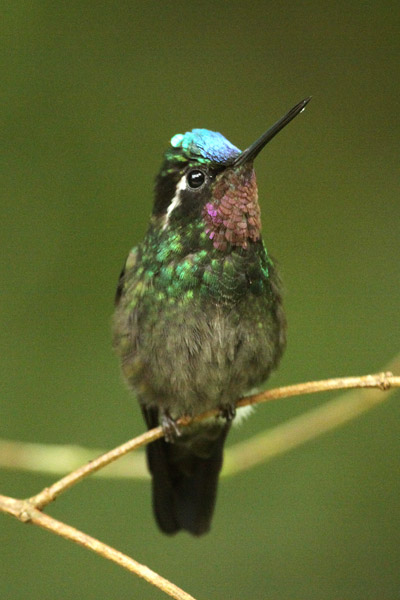
Violet Sabrewing

On this occasion we worked with local guide, Erick Castro, whom we have known for many years and who was really good at sorting out the many confusion species – we put our hands up and admit that Yellow-bellied, Yellowish, Yellow-margined and Yellow-olive Flycatchers, Yellow, Yellow-bellied and Yellow-crowned Tyrannulets can still sometimes be a bit of puzzle, particularly if they are feeding high in the forest canopy!

Chestnut-mandibled Toucan
 Silver-throated Tanager
 Baltimore Oriole
 Blue-grey Tanager
Montezuma Oropendola

After a night in San José on arrival we began the tour on the Caribbean side of the country, staying at the excellent Selva Verde Lodge, situated on the bank of the Rio Sarapiquí.  From there we visited La Selva Biological Station, one of the most important sites in the world for research on tropical rain forest.  For the first-time visitor to Costa Rica, starting a tour here with such an array of tanagers, orioles, toucans, woodcreepers, hummingbirds and flycatchers to contend with can be a mind-boggling experience!

Rio Sarapiquí

Next we had two nights at Arenal Observatory Lodge, still on the Caribbean slope and situated right next to the Arenal volcano.  Arenal is 1,633 metres (5,358 ft.) high and last erupted in 1968 but it is currently inactive.  It seemed strange to see Great Curassows visiting feeders here but in recent times this has been become their regular daily habit whereas previously they were birds we simply hoped to get a quick glimpse of in the forest.

 Arenal
Great Curassow

On the Pacific side of the country we had two nights at La Ensenada Lodge in the dry Guanacaste province.  The lodge is situated on the coast of the Gulf of Nicoya but as well as coastal birds such as Brown Pelican and Magnificent Frigatebird it offers many species of the surrounding dry tropical forest and there are also wetlands, notably saltpans with hundreds of gulls, terns and waders.  Birding the saltpans was like home from home and several of the species seen were those familiar from Europe such as Ruddy Turnstone and Grey Plover.  There were also Whimbrels and Sandwich Terns and we have blogged before here about these possible splits.

 La Ensenada Lodge
Hudsonian Whimbrel
White-necked Puffbird

From La Ensenada we visited Hacienda Solimar, primarily a huge cattle ranch but also a wonderful wetland with thousands of birds.  They were impossible to count but there must have been at least 5,000 Black-bellied Whistling-Ducks and as many Cattle Egrets as we have ever seen.  The highlights, however, were the much smaller numbers of Jabirus, Limpkins and Snail Kites.

 Hacienda Solimar
Jabiru

From La Ensenada we headed south, joining the Inter American Highway for a while on our way to Hotel Villa Lapas.  We stopped briefly in Puerto Caldera where we searched through flocks of Laughing Gulls looking for a Franklin’s and were surprised to find instead a first-winter Sabine’s Gull, possibly the least expected bird of the whole tour.  In the same place were 100 or more Black Terns, migrants heading north to breed.

Hotel Villa Lapas is conveniently situated close to Carara National Park and we made several visits there. Carara lies only about 90km west of San José and because of that attracts many visitors, especially at weekends.  For the general tourist here the American Crocodiles and the Scarlet Macaws are particular features and easily seen but we were more intent on seeing Antthrushes, Quail-Doves, Tinamous and Manakins along forest trails.

Scarlet Macaws

Also in this area we had an excellent afternoon boat trip on the Rio Tárcoles, looking for the specialist birds that occupy the mangroves and also seeking out the elusive American Pygmy-kingfisher.  River boat trips are always popular and usually present really good opportunities for photography.

 (Mangrove) Yellow Warbler
American Pygmy-kingfisher
Boat-billed Heron

Next we moved to the mountains, to Savegre Hotel Nature Reserve & Spa in the Cordillera de Talamanca.  Both at the hotel and at Paraíso Quetzal Lodge, our lunch stop on the way there, hummingbird feeders were a main attraction with Fiery-throated, Magnificent & Scintillant Hummingbirds, White-throated Mountain-gem and Green Violetear among the species to been seen.

 Fiery-throated Hummingbird
Birding above Savegre

A trip higher up the mountain to about 3,400m above sea level took us to a habitat described as sub-alpine tropical rain paramo.  It was obvious that one or two of our group didn’t feel particularly happy at this altitude and this was also the only time during the tour that we really experienced anything like serious rain.  However, we stuck it out and it wasn’t long before the sun re-appeared along with our target bird, the Volcano Junco.

Volcano Junco

The must-see bird in Costa Rica is the Resplendent Quetzal and the male certainly lives up to its name with its iridescent green and red plumage, extraordinarily long upper tail coverts, a helmet-like crest and a yellow bill.  We left it very late but we did eventually see one in the San Gerardo Valley, near Savegre.  It would have been hugely disappointing had we not seen one but with close to 400 other bird species seen and a mammal list that included Margay, Northern Tamandua, Hooded Skunk, Honduran White Bat, Mantled Howler Monkey and two species of Sloths we don’t think anyone would have returned home feeling anything but delighted by their Costa Rica experience.

 No new photos of Resplendent Quetzal - this one from 2006!

Wednesday, 14 April 2010

Costa Rica - Part 5

There is only one place that I have stayed on every one of my fourteen tours in Costa Rica and that is Selva Verde Lodge, located in the midst of the 500-acre Sarapiquí Rainforest Preservation Area in the lush Caribbean lowlands. Not only does the lodge offer some first rate birding and other wildlife in its immediate vicinity but it is ideally situated for visits to Braulio Carrillo National Park and La Selva Biological Station, two sites that no visiting birder would want to miss. The founding of Selva Verde Lodge is a story in itself and on this visit I was privileged to meet Giovanna Holbrook who started it all more than 20 years ago.

Selva Verde Lodge - the view from the bar!

La Selva Biological Station is operated by the Organization for Tropical Studies and is one of the most important sites in the world for research on tropical rainforest. It comprises 1,600 hectares of mainly tropical wet forests and averages 4 metres (!) of rainfall annually. Not surprisingly, we needed umbrellas, ponchos and rain jackets pretty much throughout our day here.

It's the rain forest!

The birds at La Selva are outstanding. In spite of the weather and an extended lunch (and drying out) break back at Selva Verde Lodge, we saw about 80 species during the day. Among the highlights were Great Green Macaws, Yellow-tailed Oriole, Pied Puffbird, Semiplumbeous Hawk, Vermiculated Screech-Owl, Spectacled Owl, Olive-backed Quail-Dove, Great Tinamou and Grey-necked Wood-Rail. The mammals are pretty good, too! They included Hoffmann's Two-toed Sloth (which should surely be called 'ten-toed'), Collared Peccary and everyone's favourite, cute little White Tent-making Bats.

Hoffmann's Two-toed Sloth

Our visit to Braulio Carrillo National Park was combined with stops at several other sites. It was good to find that El Tigre Marsh has not yet been drained and turned over to pineapple cultivation, although that is apparently still on the cards. Nicaraguan Seed-Finches were more abundant than I've ever seen them but sadly there was no sign of Pinnated Bittern or Green Ibis that I have seen there in the past. Along the Rio San José, we found a Sunbittern at a nest and also a Fasciated Tiger-Heron; at the butterfly garden of El Tapir reserve we were treated to great views of the much sought-after Snowcap.

Snowcap

Braulio Carrillo covers a vast expanse of lowland and highland forest much of which is virtually inaccessible. From the Quebrada Gonzalez Ranger Station we walked the 1.6-kilometre Sendero Natural Las Palmas. This is a trail where you hope to find mixed feeding flocks. However, when you do, identifying all the birds involved as they quickly pass overhead can sometimes cause even experienced birders to panic! Although we did come across a couple of flocks, we were perhaps lucky that our best experience was at a fruiting tree where Blue-throated Toucanet, Bay-headed Tanager, Collared Araçari and Speckled Tanager were all feeding along with White-nosed Coatis and Central American Spider Monkeys. It was while we were watching the two mammal species interacting that a Yellow-eared Toucanet appeared close by us. We expect to see two toucan species and two araçari species on this tour but this second toucanet is definitely a hard one to find and certainly not guaranteed!

Blue-throated Toucanet

We finished the tour with a night in the Talamanca Mountains at Savegre Mountain Hotel, situated at an elevation of 2200 metres. Sadly for most of the short time we were there it rained but we still managed to see an amazing variety of birds, many of them for the first time on the tour. My personal favourite here is always Flame-throated Warbler but American Dipper, Torrent Tyrannulet, Flame-coloured Tanager and Acorn Woodpecker were all popular, not to mention the many hummingbirds. The Fiery-throated Hummers seen on Jorge Serrano's feeders were a particular delight.

White-throated Mountain-gem

Fiery-throated Hummingbird

I have long ago lost count of the number of people whom I have taken on Avian Adventures tours to Costa Rica; I have never heard any one of them say anything bad about the country. The people are friendly and welcoming, the accommodation is of a good standard, the food is excellent and the birds are just brilliant! I'm already looking forward to the next time...

Costa Rica - Part 4

From Monteverde we travelled just a short distance to another popular tourist area - Lake Arenal and the Arenal Volcano. The road from Tilarán is another that has been significantly improved since my last visit and we were able to make much better time than expected.

The man-made lake covers an area of 33 square miles and is a major centre for windsurfing. Dependable winds have almost inevitably resulted in a windfarm development at the northern end of the lake but I understand that something like 70% of the country's energy supply is from the lake's hydroelectric dam.

Volcán Arenal is Costa Rica's most active volcano. For hundreds of years it was dormant but on the morning of 29th July 1968 a powerful eruption took place that buried the town of Tabacón, killing seventy eight people. Nowadays the activity is less damaging but it is still possible most days to hear various rumblings and explosions and at night often you can see glowing orange lava flows. Rising to 1,633 metres (5,358 ft), it has the perfect conical shape that one expects of a volcano. Unfortunately, my experience here on many visits has been that low cloud has completely covered Arenal, sometimes to the extent that I wouldn't even have suspected that it was there!

On this occasion we were lucky. Although, low cloud on the evening of our arrival limited the amount of falling lava we were able to see, the following morning the cloud eventually lifted and there it was, the classic Arenal view complete with falling boulders.

Volcán Arenal

However, we weren't here to look at some volcano, we were here for the birding! And excellent it was, too. Most of our birding was in the superb grounds of Arenal Observatory Lodge and along the road between the lake and the lodge. The list of species seen was impressive but the highlight for me was catching up at last with Keel-billed Motmot, a species that had previously eluded me. Unfortunately, in very poor late afternoon light I had to push the capabilities of my 50D to the limits to get any sort of photograph of it. At the edge of its range here, the bird appeared to be paired with a Broad-billed Motmot. Thankfully the following morning, when the sun eventually appeared, photography became somewhat easier.

Keel-billed Motmot

Great Curassow

Red-legged Honeycreeper

Montezuma Oropendola

Of course, we were now on the Caribbean side of the country for the first time and even many of the common species here were new for this trip. On the other hand, there were quite a few species that we saw only in the Arenal area, notably Black-crested Coquette, Slaty Antwren, Spotted Antbird, White-ruffed Manakin, Sulphur-rumped Flycatcher, Canada Warbler, Rufous-winged Tanager, Crimson-collared Tanager and Black-striped Sparrow. It's definitely a place not to miss.

Next: Selva Verde Lodge...

Tuesday, 13 April 2010

Costa Rica - Part 3

From Solimar we travelled next to Monteverde but, on the basis that you can never have too many opportunities to look at shorebirds, there were diversions on the way to the salinas at Colorado and a second visit to Punta Morales. Both sites had numerous Grey Plovers, Short-billed Dowitchers, Willets, Black-necked Stilts, Western and Least Sandpipers and more. At Punta Morales there were 20 Marbled Godwits, not a common species here, and a Franklin's Gull, my first ever in Costa Rica.

In past years the drive from sea level up to Monteverde, located at an elevation of about 4,500 feet, has been a slow, bumpy experience but much of the road has recently been surfaced and the journey is now much more enjoyable. As we gained height, there were spectacular views over the Gulf of Nicoya. By mid-afternoon we were at our new base, the excellent Trapp Family Lodge.

The modern town of Monteverde was founded in the 1950s by Quakers from the USA. It is now a major tourist destination with the main attraction being what we have come to know as the Monteverde Crowd Forest Reserve that is said to draw around 70,000 visitors annually.

We spent what remained of the day at the Hummingbird Gallery, essentially a shop with several hummingbird feeders outside that regularly attract seven or eight species of hummers and also Bananaquits. It's a great place to spend an hour or more but for the first-time visitor it's daunting to be faced with so many new birds. With males and females of some species looking completely different, it's quite a challenge.

Purple-throated Mountain-gem

Green-crowned Brilliant

Green Violet-ear

Coppery-headed Emerald

Violet Sabrewing

The following morning we set off not to the Monteverde Reserve but to the nearby Santa Elena Cloud Forest Reserve. However, this too is becoming increasingly popular and it's fair to say that this whole area is not the place to be if you're seeking solitude! Having said that, the birding is excellent and the whole 'rainforest experience' truly wonderful with mosses, ferns, flowers and epiphytes growing on the trees and dangling roots and vines sweeping across the trails.

Cloud Forest

Without doubt the star birds for us were the Three-wattled Bellbird and the Resplendent Quetzal, but there was a strong supporting cast that included the exotic-sounding Brown-billed Scythebill, Spangle-cheeked Tanager, Streak-breasted Treehunter, Silvery-fronted Tapaculo and Prong-billed Barbet. We could hear the Bellbird and the Quetzal long before we saw them; in fact we spent quite a while searching for the Bellbird in the branches above our heads before finally it showed itself. Only a few minutes after that success, we located the Quetzal and truly resplendent it was, too!

Resplendent Quetzal

The other main site that we visited at Monteverde was what is now called Santuario Ecológico, formerly Finca Ecológica. This has always provided good birding with the emphasis very much on ground-dwelling species and true to form amongst a decent list of birds seen were White-eared Ground-Sparrow, Ovenbird, Black-breasted Wood-Quails and Chiriqui Quail-Dove, all of them on the forest floor.

Quite a lot of birding was also done along the roadsides where amongst the often-seen species were White-throated Robin, Blue-throated Toucanet, Slate-throated Redstart and Mountain Elaenia.

Slate-throated Redstart

Monteverde can be a wet (think rainforest) and windy place but on this occasion the weather was reasonably kind to us and the birding very good indeed.

Next: would we see the Arenal volcano or would it (as so often) have its head in the clouds?

Monday, 12 April 2010

Costa Rica - Part 2

On the fourth full day of our tour in Costa Rica we headed for the hot and dry Guanacaste region in the north-west of the country where we had a two-night stay at Hacienda Solimar.

We made several stops on the journey north including one at the salinas at Punta Morales, a habitat that was 'home from home' for me. However, most of the birds were different from those I see on the saltpans here in Tavira with Black-necked Stilts, Western and Least Sandpipers the most numerous shorebirds. One bird familiar from the Algarve was a Caspian Tern that somehow, after a prolonged struggle, managed to swallow a fish so big that it would have made a meal for me!

Salinas at Punta Morales

Hacienda Solimar is a working cattle ranch adjacent to Palo Verde National Park. I've no idea how many Brahman cattle they have here but it's quite a lot! They are beef cattle, said to have a greater ability to withstand heat than European cattle and to be more resistant to parasites and disease. In short, they are ideally suited to the Guanacaste climate. Perhaps not surprisingly one of the most numerous birds at Solimar was Cattle Egret!

Brahman bull

Hacienda Solimar

Cattle Egret

The lodge offers simple, family-style accommodation and some excellent birding in gallery forest, tropical dry forest and extensive wetlands; local guide, Demetrio, knows the area like the back of his hand and helped us find a remarkable variety of bird species.

For me, the highlights of our morning in the gallery forest were White-necked Puffbirds, Laughing Falcon and Great Black-Hawk but for some of our group the Mantled Howler Monkeys were equally popular.

Probably the 'star' bird at Solimar is Jabiru, a large stork that actually stands more than four-feet tall. We managed to see two of them as well as a variety of other wetland species in the same area: Wood Storks, Northern Jacanas, White Ibises, Roseate Spoonbills, hundreds of Black-bellied Whistling Ducks and Blue-winged Teal and several shorebird species, notably Solitary Sandpiper and Southern Lapwing. It was good for raptors, too, with Harris's Hawk, Snail Kites and a Peregrine Falcon. And not surprisingly, where there were Snail Kites, there were also several Limpkins, another bird that feeds largely on molluscs, particularly apple snails.

Jabiru

Northern Jacana

Bare-throated Tiger-Heron

There was also plenty of bird interest just around the lodge. Both Spot-breasted and Streak-backed Orioles were regular, Yellow-naped Parrots were usually heard before they were seen, a family of Pacific Screech-Owls were roosting in a tree by the main driveway and a Barn Owl was also nearby. In the evening, Pauraques could be heard and seen right by the lodge. And the wildlife interest isn't restricted to birds - just as in the rest of the country, butterflies, mammals, reptiles and amphibians mean that there is always something to look at.

Yellow-naped Parrot

Black Iguana

Pacific Screech-Owl

For those whose perception of Costa Rica is simply as a country of tropical rainforest, Solimar comes as something of a surprise but the variety of habitats and wildlife for me make it an essential element of any tour here.

Next stop: Monteverde...