Showing posts with label Castro Marim. Show all posts

Monday, 26 September 2016

Back in the Algarve at last!

We’ve been back in the Algarve for just a week now and seem to have timed our return quite well.  The weather is very pleasant but no longer uncomfortably hot, children have returned to school and birds are migrating!

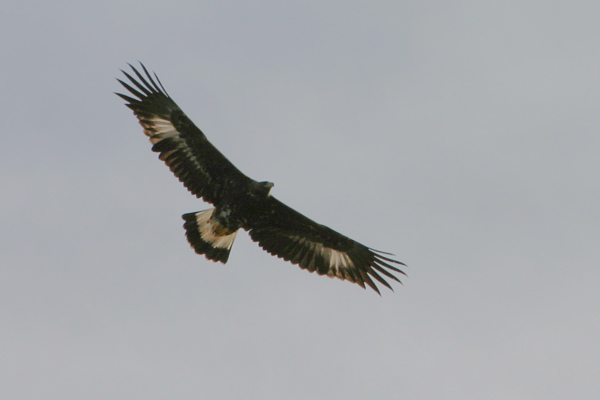
 Short-toed Eagle

Already we have been to Castro Marim, Ludo, Quinta do Lago, Parque Ambiental de Vilamoura, Lagoa dos Salgados (twice) and Sagres (twice) and seen more than 120 species.

Castro Marim, usually one of our favourite reserves, proved to be something of a disappointment.  There are plenty of birds there, particularly in the Cerro do Bufo sector but with access to the site restricted it is difficult to get close to many of them.  Highlights were Black-necked Grebes, Audouin’s & Slender-billed Gulls and of course there are hundreds of waders and Greater Flamingos but a telescope was definitely a necessity.  The salt harvest is in progress and it looks to have been a productive season.

 Salt harvest and Black-tailed Godwits

 Juvenile Greater Flamingo

Dunlin

There was also much salt-related activity at Ludo.  As so often, it was raptors there that proved most popular with five Booted Eagles putting on a show and a single female Marsh Harrier quartering the reedbed.

Booted Eagle

At Quinta do Lago, Little Bitterns were the stars.  We saw seven or maybe eight different birds.  A Water Rail showed well; a juvenile Black-crowned Night-Heron and a Whiskered Tern were unexpected treats.  We lost count of the number of Western Swamphens but nine of them were together, completely in the open on the golf course; two Glossy Ibises took off and left before we had much chance to look at them.  Five species of gulls were on the lagoa de São Lourenço and two or three Kingfishers were chasing each other about.

Lagoa de São Lourenço from the hide

The Parque Ambiental de Vilamoura has become a favourite place at this time of the year and it didn’t disappoint – it was full of birds!  Most numerous were Willow Warblers and Chiffchaffs and Yellow Wagtails with one or two Northern Wheatears and Pied Flycatchers but we know from past experience that all sorts of rarities can and do turn up here at this time of year.  We will be back for another look very soon.  A Black-winged Kite here was reasonably approachable.

Northern Wheatear

The water level at Lagoa dos Salgados was lower than we would have liked but still there were impressive numbers of birds.  Notable were a Marsh Harrier, an Osprey, a Black-winged Kite, at least four different Bluethroats, a Little Bittern, several Western Swamphens and what appeared to be a thunbergi-type Yellow Wagtail.  Waders included Little Stint, Bar-tailed & Black-tailed Godwits, Common Snipe and Wood Sandpiper.  We searched through hundreds of gulls without finding anything other than fuscus, michahellis and ridibundus.  Glossy Ibises were especially numerous and on our first visit we estimated that there might have been as many as 1,000.  We managed to read colour-rings on several of them, which identified their origins as breeding sites near Sevilla and Huelva in Andalucia.  Two colour-ringed Spoonbills had travelled further – one from France and one from the Netherlands.

 Common Snipe

 Lagoa dos Salgados

Glossy Ibis

Both of our trips to Sagres produced reasonable numbers of raptors and importantly there were good, close views of many of them.  Most numerous were Black Kites (31 on the first visit, slightly fewer the second time).  Also seen were Egyptian Vultures, Short-toed Eagles, Booted Eagles, Honey-buzzards, Common Kestrels, a Sparrowhawk, a Goshawk and a Peregrine Falcon.  Two Black Storks came close overhead.  We saw just a single Little Bustard and a couple of Red-billed Choughs, while migrants included a Wryneck, several juvenile Woodchat Shrikes, Common Redstarts, both Pied & Spotted Flycatchers, Whinchats and Northern Wheatears.

 Egyptian Vulture

 Black Stork

Little Bustard

So, not a bad start (for us) to the autumn migration period and still more than enough places to visit. 
 

Monday, 6 April 2015

Easter birding in the Algarve

This last week our birding time has been spent mostly around Castro Marim and in the Ludo / Quinta do Lago area.  Both have been full of interest and some days it has been difficult to decide in which direction we should set off! 

 Castro Marim Reserve

Quinta do Lago

In a week which saw temperatures rise to almost 30º and a change in the wind direction, it has been great to see a variety of migrants at last arriving in numbers including Common Cuckoos, Bee-eaters, Nightingales, Northern Wheatears, Purple Herons, Woodchat Shrikes and Reed Warblers as well as the first Golden Orioles and Collared Pratincoles.  There have been Garganeys at several sites and among the Yellow Wagtails birds of the flava and flavissima races have joined the earlier arriving iberiaes.

 Woodchat Shrike

 European Bee-eater

Garganeys

The main attractions currently at Castro Marim have been the Little Bustards, which are now displaying and easy to see.  Spectacled Warblers and Great Spotted Cuckoos have also been popular and there has been a nice selection of passage waders that has included Spotted Redshank, Ruff, Black-tailed Godwits and Greenshank.  On Good Friday we saw a Short-toed Eagle there and the wintering Osprey with the red ring on its left leg seems reluctant to leave.  Marsh Harriers are also displaying and from time to time a pair of Ravens appear.

Spectacled Warbler

Although we have found Little Bitterns, Glossy Ibises, Red-crested Pochards and Purple Swamp-hens around Castro Marim in the last few days, these are species that are definitely easier to see In the Ludo / Quinta do Lago area.  Black-headed Weavers are now busy building nests and are also fun to watch in front of the hide that overlooks the Lagoa de São Lourenço.  The long-staying Red-breasted Flycatcher seems to have left and the Little Crakes didn’t stay very long but we have seen Wryneck, Booted Eagles, Osprey, Black Kite and Black-winged Kite as well as a few Mediterranean & Audouin’s Gulls.

Little Bittern

Purple Swamp-hen

Of course, we have also managed to visit the wonderful Castro Verde / Mértola area where Great Bustards are now displaying and easy to see.  One morning we stood and watched about a dozen of them at the same time as there were also in view two Spanish Imperial Eagles, a Black Vulture, 30 Black-bellied Sandgrouse and several Calandra Larks.  It was hard to decide where to look first!  We saw 10 raptor species during the day, which really is the minimum number we would expect at this time of year.  The first Rollers are just arriving but our experience is that Black-eared Wheatears are so far slow making an appearance.

Great Bustards

 White Storks

Almost wherever we go but particularly numerous in the Baixo Alentejo there are White Storks nesting.  We rather take them for granted but their black, white and red colours seen against a clear blue sky make a fine sight and we love to hear them bill-clapping.  There’s a colour-ringed White Stork nesting near Aipo that was ringed as a nestling at nearby Navarro (Castro Verde) in 1999.  It has been using the same nest for several years which is typical of the species but has been seen feeding on rubbish dumps in Spain in the dry autumn months when frogs are hard to come by.

Monday, 29 April 2013

Windy Day

Left to our own devices we might well have stayed home yesterday.  From just a quick look at the weather forecast we could see that it would be a difficult day for birds and birdwatchers with winds of 20mph or more from the NNW.  It was going to be cold and birds were going to be sheltering and hard to see.

However, arrangements were made and we were committed: June to a half day visit to Castro Marim, Peter to a full day in the Castro Verde area in the Baixo Alentejo.

The star bird at Castro Marim was undoubtedly the female Red-necked Phalarope that June found at Cerro do Bufo.  Like many of the other waders here now it was a bird that is moulting into its breeding plumage.  It is only the second of this species that we have seen in the Algarve and is sufficiently rare here that it will require a submission to the Comité Português Raridades.


As well as a dozen other wader species, the supporting cast included Little Bustard, Golden Oriole, Great Spotted Cuckoo, Greater Flamingo, Montagu’s Harrier, Red-rumped Swallow, Woodchat Shrike, Hoopoe and Azure-winged Magpie, some of these very common birds to us but much appreciated by visitors who are here for only a week.

Up in the Alentejo, the day’s bird list included most of the target species but raptors in particular were in short supply and there was only a quick glimpse of Black-bellied Sandgrouse.  Highlights, again from a visitor’s perspective, were Collared Pratincoles, Griffon & Black Vultures, Spanish Imperial Eagle, Rollers, Lesser Kestrels, Great & Little Bustards, Short-toed Eagle, Calandra Lark and Montagu’s Harriers.  However, finding birds was hard work and the area's other attractions including the continuing spectacular display of wildflowers were a welcome diversion.


Thursday, 2 August 2012

Good timing...or bad?


The Algarve can be pretty warm at this time of the year which is one of the reasons why in August we can expect an influx of tourists and why Tavira becomes rather more crowded than we like it to be.  Fortunately, the Birdfair at Rutland Water gives us an excuse to get away for a while and already we are in the UK.

We congratulated ourselves on the timing of our departure – we left on what was the hottest day of the year so far and a sign of things to come.  Of course, we knew that the weather in the UK might not be to our liking either but in fairness it hasn’t so far been too bad, although only a poor imitation of summer! 

The day after we left Tavira serious fires broke out in the hills to the north of the town and around São Bras de Alportel.  For three days almost 1,000 local firefighters battled hard to get the situation under control but were hampered by the hot and breezy weather conditions.  As many as 165 vehicles were reported to have been involved and a specialist aircraft from Spain was brought in to help in the struggle by dumping large volumes of water from the air.  In the end something like 5,000 hectares have been burned including large areas of cork oak trees.  The effect on the local economy and environment will no doubt be severe and likely to be long term.

Although the fires were far enough away from Tavira not to affect us directly, again we thought that we had done well to time our departure so as to miss them.

Subsequently, we have had to reconsider!  Firstly came news of a Broad-billed Sandpiper at Castro Marim, only the third ever record for Portugal and the second in the Algarve.  We spend countless hours at Castro Marim and have seen lots of good birds there over the years but still it was a bit frustrating to miss this one.  It’s a species that we have long predicted would turn up there and one we have often talked about seeing in the Algarve.

At least we have both seen this species in the past, most recently at Drayton Bassett Pits in Staffordshire in June 2004. 

 Broad-billed Sandpiper - Drayton Bassett Pits, Staffs - June 2004

We were just getting over the Broad-billed Sandpiper when there was more news from Castro Marim.  In what was presumably a classic instance of the ‘Roadside Rest Effect’, a Marsh Sandpiper was found there by Pedro Ramalho.  Of course, we have seen lots of Marsh Sandpipers and in fact we found one ourselves at Castro Marim in September 2009 but we do love those Tringas and were sorry to not to see this one.   

 Marsh Sandpiper - Uganda, February 2007

Incidentally, the expression ‘Roadside Rest Effect’, refers to the situation in which the discovery of one rarity leads to more rarities being found in the same location, usually because of the arrival of more birders and it originates in Arizona where the Patagonia Roadside Rest has been the scene of several twitches that have resulted in the finding of additional rarities.

So, we escaped the heat and missed the fires but we also missed out on a couple of rare waders.  Maybe our timing wasn’t that good after all!

Saturday, 30 June 2012

Castro Marim

We’ve spent three mornings this week at and around the Reserva Natural do Sapal de Castro Marim e Vila Real de Santo António, which not surprisingly we tend to refer to simply as Castro Marim.  Not only is this one of the most productive birding sites in the Algarve but it also has the attraction for us that it is reasonably close to our base in Tavira and can be reached fairly quickly without incurring road tolls.

It’s getting to be quite warm here now with temperatures rising to 30ºC and higher by mid-morning, so early starts have become an essential part of our routine.  Breakfast has been accompanied by the ‘cut-ock, cut-ock’ song of Red-necked Nightjars and the calls of Little Owls, two birds that get the day list off to a good start before leaving home.


Castro Marim is primarily a wetland area and we have mentioned before that we recently counted almost 1,600 Greater Flamingos there.  We haven’t counted them this week but have no reason to think that there are any fewer than that number.  There is more to the reserve than just saltpans but they are a major attraction and already many Spoonbills and waders are returning, birds that have been north to breed or perhaps have suffered a failed breeding attempt.  Most numerous of these are Black-tailed Godwits but Dunlins, Grey Plovers and Ruddy Turnstones have also been seen and we were particularly pleased to see and hear the return of our favourite, Greenshanks and Green Sandpipers.


The local breeding waders, Kentish Plovers, Avocets, Black-winged Stilts and Stone-curlews all have young, some of them now well-grown.  A month or so ago, we saw a pair of Little Ringed Plovers with young on the reserve and it seems likely that Common Redshank have also nested in the area.


Gulls seen this week have been just the usual Yellow-legged, Slender-billed and Audouin’s.  Little Terns are numerous but it seems that they may not have had much breeding success.  Up to three non-breeding Caspian Terns have remained in the area and a flock of 18 Black Terns passed through on Tuesday.  Sightings of Collared Pratincoles have been popular and several pairs are assumed to be breeding.


We read somewhere in one of the guide books to the Algarve that there are few raptors here other than those seen at Sagres during the autumn period and that seeing anything other than a Common Buzzard or a Common Kestrel could be considered a bonus.  Well, we must have been very lucky this week with seven species seen just at Castro Marim!  A Black-winged Kite near Tavira made eight species.


We are still finding one or two Glossy Ibises in unexpected places and Castro Marim is no exception.  Several Purple Herons are being seen around the reserve which may also be birds displaced from Doñana.

Other highlights of the week at Castro Marim have been a pair of Purple Swamp-hens, singing Golden Orioles, a pair of Spectacled Warblers feeding young, Bee-eaters going backwards and forwards in and out of nest holes, several pairs of White Storks with young, Woodchat Shrikes, Southern Grey Shrikes, Little Bustards and what appeared to be a family party of four Common Ravens.


It is disappointing that ICNB have found it necessary to stop access to the Cerro do Bufo sector of the reserve and we miss doing the circular walk there that was part of our weekly routine.  Still, we have adapted to the change and we hope that visiting birders will also respect the restrictions – there are plenty of birds to be seen without the need to trespass!  

Saturday, 14 April 2012

The Last Two Weeks

It’s the migration season, that time of the year when even more than usual we want to be out birding all day every day. So that’s what we’ve been doing and why it is there’s been no news from us for almost two weeks!

During that time, we’ve had two further visits to the Castro Verde area, a trip across the border to Doñana and multiple visits to the usual sites in the Algarve – Quinta do Lago, Ludo, Castro Marim, Tavira/Santa Luzia, Olhão and even Lagoa dos Salgados, somewhere that we don’t go all that frequently.

We’ve had no further luck with the crakes at Quinta do Lago and neither it seems has anyone else. There’s been one further report of a Little Crake there but no confirmation of the Baillon’s Crake reported on 22nd March. Interestingly, three further Baillon’s Crakes have been found further north in Portugal during the past couple of weeks and there’s been at least one in Spain. There was another Little Crake at Vilamoura on 2nd April and there have been at least three Spotted Crakes in the Algarve during the same period of easterly winds.

The weather that brought the crakes has also resulted in us having many more migrants than usual in the Algarve. Species such as Subalpine Warbler, Bonelli’s Warbler, Black-eared Wheatear, Common Redstart and Greater Short-toed Lark have all appeared in greater numbers than we normally expect and it has made for some exciting birding.

Greater Short-toed Lark

No further sightings of crakes at Quinta do Lago but it has been a great place to watch Little Bitterns. Black-headed Weavers have been busy building nests there and are always a talking point and Purple Swamp-hens can always be relied on for entertainment. Not far away, Glossy Ibis continue to be seen and we’ve heard a Savi’s Warbler singing on two or three occasions. The Barnacle Goose that we first saw back in October is still present and appears to be of the fulica race, making itself at home feeding on the golf course with the Coots!

Glossy Ibis

When we’ve been to Quinta do Lago we’ve usually also spent time at nearby Ludo. The saltpans there haven’t been very productive but the raptors have been good with Booted Eagles, Black Kite, Montagu’s and Marsh Harriers, Common Buzzard, Peregrine Falcon and Osprey all seen there in the last week. A pair of Wrynecks (one of June’s favourites) also put on a good show for us one morning.

We still rate Castro Marim as the best birding site in the Algarve and spend quite a lot of time there. As well as regular birding there, we’re also helping with a survey of the breeding Lesser Short-toed Lark population. As usual with survey work, one of the side benefits has been that we have birded in areas that we don’t usually go to. Amongst the recent highlights at Castro Marim have been several pairs of Great Spotted Cuckoos, displaying Little Bustards, a Short-toed Eagle, Montagu’s Harriers, half a dozen Glossy Ibises, more than 50 Slender-billed Gulls and plenty of waders, including Spotted Redshanks and Curlew Sandpipers starting to show signs of breeding plumage and, yesterday, a Wood Sandpiper.

Slender-billed Gull

The woodland at Aldeia Nova is worth a quick visit when in the Castro Marim area and we have been rewarded there recently with Ferruginous Duck, Red-crested Pochards and Black-crowned Night Heron at the small pond and Bonelli’s Warbler in the pines.

The Castro Verde area has continued to provide us with excellent birding. Displaying Great Bustards and Little Bustards are the ‘crowd pleasers’ along with the Spanish Imperial Eagles and it’s great now to see so many Montagu’s Harriers and Lesser Kestrels. We’ve also enjoyed watching the song-flights of Calandra Larks. On our last visit we had great views of a flock of about 50 Black-bellied Sandgrouse, two Collared Pratincoles and the first Rollers of the year.

Montagu's Harrier

We also had good views of a Spanish Imperial Eagle when we were in Doñana but there the sandgrouse were of the Pin-tailed variety. Other highlights of our day there were 20+ Griffon Vultures, Short-toed Eagles, Purple Herons, Great Reed Warblers, Black-crowned Night Herons and countless Black Kites. It was disappointing to see how much the area seems to have suffered from the very dry winter; few egrets or Glossy Ibises appear to be nesting at the JAV Centre where they are usually such a feature.

Black Kite

The soundtrack to the last two weeks has been the songs of Corn Buntings, Cetti’s Warblers, Serins, Nightingales and Zitting Cisticolas and the calls of Bee-eaters. We’re looking forward to adding Golden Oriole to that list very soon and we’re also listening out now for the return of Red-necked Nightjars.

European Bee-eater

Sunday, 25 March 2012

Castro Verde, Castro Marim and more

March is a month when we expect to spend a lot of time in the Castro Verde area and we’ve had two more trips up there this week, making three visits in the past eight days. The number of species recorded on each visit has averaged 76 but these days in the Alentejo are more about quality than quantity. During these trips we have not just seen but had really great views of 16 species of raptors with Golden Eagle, Bonelli’s Eagle, Peregrine Falcon, Common Buzzard, Griffon Vulture and Black Vulture now added to the list that was included in our last report. We’ve watched countless Great Bustards displaying, almost seeming to turn themselves inside out and looking like big white powder puffs; some Little Bustards are also displaying now but many still seem to be in flocks. Other popular species have been Calandra Larks and Great Spotted Cuckoos, Black Stork and the numerous nesting White Storks.

Golden Eagle

Short-toed Eagle

Of course, we’ve also visited several of our favourite sites in the Algarve. At Quinta do Lago, we were pleased to get good views of a Purple Heron and a Little Bittern and once again a couple of Sacred Ibises were seen alongside the more familiar Glossy Ibises. At Ludo, we expected to find Booted Eagles and we weren’t disappointed.

Little Bittern

At Castro Marim, we had several encounters with noisy Great Spotted Cuckoos and at Aldeia Nova there was a Common Cuckoo. Last year we sponsored ‘Chris’, one of the Common Cuckoos that the BTO tagged and have been tracking by satellite throughout the winter months. It’s interesting that we have Cuckoos returning here now to the Algarve but ‘Chris’ and the other BTO Cuckoos, that are presumably going to return to the UK, are still in West Africa.

Great Spotted Cuckoo

Yesterday, during the high tide period, we were at Castro Marim again to carry out a count of the waders and other birds, mostly Greater Flamingos and Spoonbills, on the saltpans there. Avocets, Dunlins, Grey Plovers and Ringed Plovers were the most numerous species but the job wasn’t made any easier by a male Montagu’s Harrier that spooked the birds on a couple of occasions. Normally we love to see Montagu’s Harriers but when we’re half way through counting a flock of several hundred birds and they all take off in panic…well that does tend to change our views! It recalled occasions at Belvide Reservoir years ago when a Peregrine Falcon would often be the culprit that disrupted wildfowl counts.

Meanwhile, here in Tavira we’re starting to see a few more migrants. This morning we came across several Woodchat Shrikes, Greater Short-toed Larks and a Subalpine Warbler and heard the familiar calls of Bee-eaters. Our ‘bird of the morning’, however, was probably a lovely Black-necked Grebe in fine summer plumage. We have still been seeing Bluethroats this week but they will soon be on their way north. The Slender-billed Gulls that have wintered here will also soon be leaving; there are currently 14 of them. Only three years ago this species was classified as a rarity in Portugal but in the south-east of the country we go out most of the year almost expecting to see them and maybe it won’t be long before they join Audouin’s Gulls and breed here.

Woodchat Shrike

Bluethroat

Slender-billed Gull