Showing posts with label Nightingale. Show all posts

Wednesday, 10 June 2009

Little Terns

We had to make a trip to Faro airport yesterday so where better to go afterwards than Quinta do Lago - yet again!

We walked in through Ludo farm and used the last hour or so of light trying to photograph Little Terns, a surprisingly difficult task. In fact we managed no more than half a dozen images but got lucky with this one. Not brilliant, but our best so far.

Little Tern

We arrived back in Tavira at 9.00pm just an ideal time for us to check on our local Red-necked Nightjars. No pictures but good views as usual and again we enjoyed seeing an assortment of bats flying about in pursuit of the many moths and other insects. We also watched two juvenile Little Owls, one of them running about just a few yards in front of our parked car, picking beetles off the road surface. All of this to a background of singing Nightingales - an excellent end to the day!

Thursday, 26 March 2009

Windfarms!

June was apoplectic on Tuesday morning when she read the BBC News email. There was a story headlined RSPB calls for more UK wind farms. Our first reaction was that we had somehow lost a week and that it was April Fools Day but no, it was still only 24th March. So what on Earth is going on? Is the RSPB finally coming clean about its business partnership with Scottish & Southern Energy? Is it finally admitting that all the accusations that have been made against it over the past few years are true? This unqualified and enthusiastic endorsement of wind farms is otherwise hard to understand from an organisation that is supposed to be about bird protection. It is difficult not to conclude that the RSPB has been ’bought’. Well, whatever they are being paid will have to offset the loss of subscription income that will surely result. We wonder what Peter Condor would make of it all.

Anyway, yesterday we went to have a look at one of these wind farms. It’s in the Serra do Caldeirão and about two hours drive from here. Of course, we were birding really but our all-day trip through the rolling hills and valleys west of Ameixal inevitably took us to the highest point in the area at Mu (577 m above sea level) where wind turbines are currently still under construction. In fact we sat and had our picnic under the shadow of one of these giants. Not to beat about the bush any longer, WE HATE THEM! But the bandwagon is rolling and, with the help of Europe’s largest wildlife charity and all the other vested interests, looks to be unstoppable, so be prepared for one near you anytime soon. Don't expect to see any change to the climate though!

Otherwise it was a lovely, mostly sunny day with Nightingales singing in the valleys, Bee-eaters hawking over the rivers, Subalpine Warblers skulking in the Cistus scrub, Short-toed Eagles soaring, hirundines gathering mud for nest-building and much much more. A very noticeable feature of the day was the continuous passage of Painted Lady butterflies - thousands of them going by all day.

We took a few photographs...

European Bee-eaters

Following the RSPB's lead, Peter got one fitted to his bird...

Red-rumped Swallow collecting mud

Rock Bunting

Tuesday, 24 March 2009

Sunshine After The Rain

The day started cloudy and there was even a slight rain shower but by lunchtime, as we were watching the local Little Owls in trees across the road, the sun appeared. Time to forget about 'admin', grab the camera and bins and head off to the saltpans!

In no time we were watching Bee-eaters prospecting for nest sites. Numbers have increased over the last few days; today there were about a dozen but none came near enough for a photograph. At the same time a pair of Zitting Cisticolas was displaying and several times the 'wet-my-lips' call of a Quail came from an adjacent cereal crop over which many House Martins, Barn and Red-rumped Swallows hawked for insects. We tried hard to photograph Yellow Wagtails but had to settle for just watching them busily feeding just out of camera range, numerous but unco-operative. Most were iberiae but there were also one or two flava. In the end, like yesterday, we had to be content with a few more wader images.
Kentish Plover


Stone-curlew

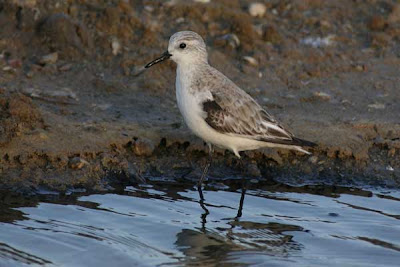
Sanderling

On the way home we made a slight diversion to see whether Nightingales had arrived at what is the nearest regular site. Here our luck changed as we almost immediately located our target and with just about enough light for a photograph. No doubt there will soon be evenings when we go there simply to listen.


Nightingale