Showing posts with label Eurasian Griffon. Show all posts

Saturday, 21 May 2016

Back into our routine

With Peter now back in the Algarve after his travels for Avian Adventures we have returned this week to our usual routine that includes birding in both the Algarve and Baixo Alentejo, some photography and some reading of colour-rings.

We began on Monday with a trip to the salinas at Olhão where two Red-necked Phalaropes had been seen during the previous few days. This species is classified as a rarity here and is always a delight to see. With good directions we easily found one of them but have to assume that the other one had departed.

 Red-necked Phalarope
Whilst in the Olhão area we called in at Quinta de Marim. This was partly to see our friends at RIAS but also to have a look for a Marbled Duck that had been seen and photographed on the small freshwater pond there. Marbled Duck is a species that many visiting birders want to see and ask us to find for them, presumably not realising what a scarce bird it has become in Iberia. The last record in the Algarve was in January 1997!

Marbled Duck

It used to be that they could be found across the border in Doñana but relatively few remain there and they aren’t easy to find. The breeding population is very small and has undergone a large and rapid decline because of destruction and degradation of breeding habitat. Many of the wetlands in North Africa where they spend the winter have also beeen destroyed.

Marbled Duck

When we found the duck it was quickly obvious that it had a yellow ring on its right leg and this it would seem is evidence that it originates from a Spanish re-introduction project. For more precise details it will be necessary to read the inscription on the ring, something that won’t be easily achieved!

We did hear that there had been a report of two Marbled Ducks at Quinta de Marim, which together with the secretive behaviour of the bird we saw has given rise to speculation that a breeding attempt might be in progress. Now that would be exciting!

A morning out around Tavira with the camera resulted in some pleasing portraits of European Bee-eaters. We also spent some time at a small puddle where Serins and Goldfinches were drinking and bathing and House Martins were collecting mud.

 European Bee-eater

House Martin

We spent a full day in the Castro Verde area where we saw most of the expected species including thirteen raptor species, European Rollers and both Little & Great Bustards. Rufous-tailed Scrub Robins (aka Rufous Bush Chats), Collared Pratincoles, Cattle Egrets and Gull-billed Terns were also getting on with the business of breeding. We also saw four Mute Swans but we’re not sure what they were doing there!
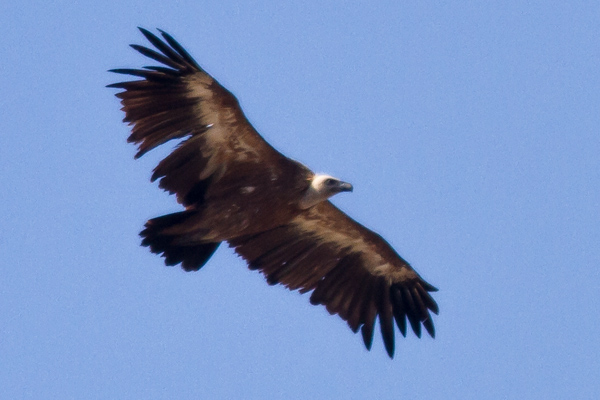
 Eurasian Griffon

 Gull-billed Tern

Rufous-tailed Scrub Robin

Cattle Egret

An enjoyable afternoon was taken up with a visit to the Audouin’s Gull breeding colony in the Ria Formosa. This species began breeding in the Algarve in 2001 and it’s amazing that there are now estimated to be 1,800 pairs here.  Forty years ago the global population was estimated to be only 1,000 pairs! The population has expanded owing to increased availability of fisheries discards close to key breeding colonies, something that could in future be affected by the EU Common Fisheries Policy. We managed to read a few colour-rings including some indicating that the birds originated from the Ebro Delta in Spain, site of the largest colony in the Mediterranean. There is also a substantial breeding colony of Yellow-legged Gulls on the island.

 Audouin's Gull

 Yellow-legged Gulls

Wednesday, 10 September 2014

Vultures

An African White-backed Vulture (Gyps africanus) seen at the Estação Biológica do Garducho, near Mourão on 24th August is just the second record of this species for Portugal and only the fifth for Europe.

African White-backed Vulture (Tanzania)

It was seen at one of the vulture feeding stations set up in that part of Eastern Alentejo by the LIFE Lince Abutre project, which aims to contribute to the improvement of the survival, feeding and breeding conditions of the Iberian lynx (Lynx pardinus) and the Cinereous or European Black Vulture (Aegypius monachus) in southeast Portugal but also benefits several other threatened species.

European Black Vulture (Portugal)

Only three weeks earlier, there was a remarkable report of five Rüppell’s Griffon Vultures (Gyps rueppelli), another African species, also in the Eastern Alentejo.  Sightings of Rüppell’s Griffons in ones and twos have become regular in Portugal and Spain in recent years, most of them at Tarifa and Sagres, with some speculation about how many different individuals might be involved, so the occurrence of five together was very interesting.

Rüppell’s Griffon (Ethiopia)

It is assumed that Rüppell’s Griffons and now White-backed Vultures mix with wintering Eurasian Griffons (Gyps fulvus) in West Africa, and then come to Europe with them.  Rüppell’s has also tried to breed in Iberia, in hybrid pairings with Eurasian Griffons, but to date there has not been any evidence of success.

Eurasian Griffon (Portugal)

Last year a Rüppell’s Griffon was wing-tagged in Portugal, and was subsequently seen in France and Spain, confirming that these birds range widely across the continent.

So now we have six species of vultures to look out for: European Black, Eurasian Griffon, Rüppell’s Griffon, Egyptian (Neophron percnopterus), African White-backed and Lammergeier (Gypaetus barbatus).  Lammergeiers haven’t been seen here for a very long time but they have been re-introduced in Spain and individuals are known from satellite-tracking to have occasionally crossed the border to fly unseen over Portugal.

Egyptian Vultures (Ethiopia)

It is timely that we are writing about vultures as the first Saturday in September each year is International Vulture Awareness Day.  It also gives us an opportunity to draw attention once again to the on-line petition to ban the use in Europe of diclofenac, the drug that has been responsible for wiping out huge numbers of vultures in India, Pakistan and Nepal.  You can read more about that here and here you can donate towards efforts being made by Birdlife International to save vultures in Europe and Africa from the fate that has befallen so many in Asia.

Vultures need our help!

Sunday, 27 October 2013

That was the week...

We’ve just spent a week with two friends from the UK who are keen and widely travelled birders but making their visit to Portugal.  It was a shame that their arrival coincided with a spell of unsettled weather, including a couple of days of rain, but we did our best to show them why it was that we decided to make our base here in lovely Tavira.

Sunday, 20th
Just a half day around the Tavira and Santa Luzia saltpans where the usual selection of waders included one or two Ruff but the highlight for us was seeing Common Redshank H19 for the first time this autumn.  We have written before here about this Dutch-ringed bird, which was back in its usual spot where it has been seen regularly through the last three winters.
There are lots of Audouin’s Gulls here still and we couldn’t resist jotting down a few ring numbers.


Monday, 21st
A full day in the Castro Verde area saw the best of the week’s weather - warm and sunny with just a gentle breeze.  With persistence and a little luck we were able to find most of the target species, including both Great Bustard and Little Bustard, Spanish Imperial Eagle, Black-bellied Sandgrouse, Griffon Vulture, Black Vulture, Stone-curlew and Calandra Lark.  A Hen Harrier was our first of the season, Red Kite numbers had increased from a week ago but the day’s only Black-winged Kite disappointed by quickly disappearing from view.


Tuesday, 22nd
A dark and dismal morning with persistent rain found us at Castro Marim birding just from the car.  We saw barely 30 species in the hour or so before we saw sense and headed back home!

Wednesday, 23rd
Most of the day was spent around Ludo and Quinta do Lago where early morning raptors included four Booted Eagles, an Osprey, a Marsh Harrier and a Black-winged Kite.  We saw what were probably three different Little Bitterns and as well as the usual Purple Swamp-hens it’s nice that a Water Rail has recently taken to appearing from time to time in front of the hide.  Several Red-crested Pochards, Glossy Ibises and Black-headed Weaver completed the area’s ‘must see’ species.  Two Cetti’s Warblers put on a memorable and uncharacteristic show for us, displaying and chasing about in open view, lots of White Storks were back on their nests, the wooded areas provided Crested Tits, Iberian Green Woodpecker and Great Spotted Woodpecker but for some reason not Short-toed Treecreeper.  Two Common Scoters off Praia de Faro at lunchtime were a bonus.
We rounded off the day back in Tavira where three Bluethroats in view simultaneously could hardly have been bettered.


Thursday, 24th
When the forecast shows wet and windy weather approaching from the west, it’s best to head east!  We went to Doñana for the day and although we didn’t see much sun we did stay dry.
At La Dehesa de Abajo there were fewer birds than we saw on our last visit there two weeks ago mainly because Glossy Ibises and White Storks were mostly absent.  There were still 1,000 or so Greater Flamingos and probably twice that number of Northern Shovelers.  Among the hundreds of Black-winged Stilts, one with a colour-ring obligingly walked past the hide two or three times.  Two Black Terns, two Pallid Swifts and several Red-knobbed Coots were also notable and there were large numbers of hirundines feeding over the water.  After all that we enjoyed an excellent lunch in the visitor centre.
In the afternoon, we headed off to explore other parts of Doñana where the numbers of Marsh Harriers, Great Egrets, Grey Herons and Common Kestrels were particularly impressive.  We saw Griffon Vultures and Calandra Larks, on several occasions we had good views of Black-winged Kites but the highlight was probably seeing four Black Storks at close range, birds that we don‘t often see on the ground in the Algarve.


Friday, 25th
Heavy overnight rain continued into the morning and we decided not to venture out birding until after lunch.  The afternoon was no better; we managed half an hour or so around Tavira, birding from the car but it was no fun and we did the only sensible thing, we packed up and went home.

Saturday, 26th
During a week’s birdwatching tour in the Algarve it would be unprofessional not to go to Sagres, particularly at this time of the year when there is a chance to see some raptors and other migrants.  The weather had improved and we enjoyed a mostly sunny day with very little wind.  Unfortunately, it wasn’t a great birding day - the birds just didn‘t turn up! 
We saw a few Cory’s Shearwaters, a tired-looking Garden Warbler and a Pied Flycatcher, Shags, Rock Doves and Crag Martins and a flock of what must have been 100 or more Red-billed Choughs but the only raptors were a Booted Eagle and a Common Buzzard.


On the way back to Tavira, we called in at Lagoa dos Salgados but it wasn’t a pretty sight.  Work is currently being carried out by Águas do Algarve, which it is said should provide enhanced nesting and feeding areas for birds, enable the water levels to be controlled and generally increase the lagoon's appeal to migrating birds to stop over, rest and feed.  If it sounds too good to be true, then it probably is!  We should remember that the head of  Águas do Algarve is that same person who was previously mayor of Silves council and was instrumental in granting permission to Finalgarve for the tourist development adjacent to the lagoon that has been the subject of an online petition and a complaint to the European Environment Commissioner.

So, that was the week - some very good days, one that was not so good and two that were washed out by the weather.

Thursday, 13 September 2012

Contrasting Days!

Some days guiding can be really hard work!  Take Sunday, for instance.  We had a 12-hour day and managed to find just 41 species.  We were in the Castro Verde area where finding birds at this time of year can be really tough. 

There are times of the year in that area when you can expect to see Great Bustards round every corner; this is not one of those times.  We saw only five all day!  Little Bustards are no better; in spring they are everywhere, displaying and drawing attention to themselves; in winter, they are in flocks, now they are more or less invisible.  We saw just three of them.

The day’s bird list also included Black-bellied Sandgrouse, Spanish Imperial Eagle, Griffon Vulture (70 of them, on the ground), Short-toed Eagle, Bonelli’s Eagle, Lesser Kestrel and Blue Rock Thrush so it wasn’t a disaster but it’s not good for the nerves when you have the responsibility for finding these birds.  People say it must be nice to have a job that you enjoy and without any pressure – they just don’t know the half of it!

Eurasian Griffon

Yesterday was entirely different.  We had just a morning’s birding around Tavira, probably no more than three hours during which we saw 50 species, 18 of which were shorebirds.  We say shorebirds rather than waders because, as on Sunday, we were accompanied by visitors from the USA.  In the USA, waders are long-legged birds like herons, egrets and storks.

Black-tailed Godwit

Anyway, they were two contrasting days but both enjoyable in their own way – good birding, pleasant company and super fine weather, too!

Friday, 14 October 2011

Castro Verde Week

There’s not been much time for Algarve birding this week. Bustards have been in demand and our schedule has been dominated by trips to the Castro Verde area.

Great Bustard

As we have indicated previously, Great Bustards can be a bit elusive at this time of year and with temperatures reaching 32° it’s definitely best to be out early to look for them. It’s amazing how well they blend in with the vegetation in the parched landscape. Our 100% record of finding them remains intact but there have been occasional moments of doubt!

Little Bustards have been even harder to find in recent weeks so yesterday’s flock of more than 50 birds was particularly welcome. Sometimes we have to make do with flight views but these were on the ground and we had excellent views through the telescope.

Raptors in the area now include Hen Harriers, replacing Montagu’s, and Red Kites, replacing Black ones. We’ve had brilliant views of Spanish Imperial, Short-toed and Bonelli’s Eagles and yesterday had a reasonably close flock of two dozen or so Griffon Vultures.

Eurasian Griffon

All of the week’s Black-bellied Sandgrouse have been heard first and seen only as fly-overs; the area of habitat available for them now is huge.

Northern Lapwings started arriving several weeks ago but there are still relatively few of them. In this extremely dry environment, food must be in short supply. Mostly they are around the edges of the few reservoirs or on grassland that has been irrigated. The reservoirs are attracting a few other waders including Greenshanks and Green Sandpipers (two of our favourite birds!) and three times this week we have seen a Great Egret along with the Little Egrets and many Grey Herons. Great Egrets are relatively scarce here but we do seem to be seeing them more and more frequently. It was also good to see a couple of Black Storks standing amongst the assembled herons.

Black Stork

Northern Wheatears are numerous now, flying from roadside fence posts everywhere; it’s a time when we can easily see all three wagtail species and amongst the Yellow Wagtails there are a few Tawny Pipits.

Tawny Pipit

This Viperine Snake, a species usually found in or near to water, was taking advantage of a puddle formed by run-off from agricultural irrigation.

We don’t mind how often we visit the Baixo Alentejo and no doubt we’ll be up there again next week!

Thursday, 7 April 2011

Alentejo day (again!)

Yesterday we were in the Castro Verde area again. It was sunny and warm and we had another very good day; in fact only a strong wind prevented it from being an excellent day!

More than 20 Eurasian Griffons were seen, as well as a Eurasian Black Vulture

By now it probably goes without saying that we saw lots of bustards, Black-bellied Sandgrouse and raptors! However, we did see also a few unusual or unexpected species.

For example, we hadn’t expected to see again the Wood Sandpiper that we found three weeks ago at Alvares. This bird is a migrant heading perhaps for Scandinavia and it has chosen to pause on its way north at a tiny pond that for the past six months, through the winter, has been home to a Green Sandpiper. What is it, we wonder, that makes this bit of water so attractive to Tringas? And when will it decide to continue its journey?

One of the many White Stork nests in the area

The Red-knobbed Coot near Viseus was certainly unusual, a rarity anywhere in Portugal, in fact. There have been reports of two birds there but we found the cristata apparently keeping company with a Eurasian Coot.

Also an unusual sight in our experience was a flock of at least 30 Whiskered Terns at a lake in the heart of bustard country.

And we were surprised to find two European Golden Plovers; we had thought that all the wintering birds in the area had left some while ago. One of the birds was looking exceptionally smart in full breeding plumage.

Quite apart from the birds, at this time of year it is worth a trip to the Alentejo just for the flowers. You don’t have to be a botanist to enjoy the wonderful carpets of white, yellow, blue and purple that cover the countryside!

Flowers everywhere!

Little Ringed Plover nesting habitat

Little Ringed Plover - several pairs were seen during the day

Thursday, 11 November 2010

The Week in Pictures

We've been busy around Tavira this week where there has been plenty to keep us occupied:

Eurasian Griffons passed over Tavira this week, presumably heading for Tarifa. About 150 were counted on Sunday.

At least three Water Pipits have been regular at Pedras d'el Rei.

Meadow Pipits are now very numerous - but still smart little birds and quite variable in plumage.

Always popular and, in spite of what some of the books say, still quite vocal in November.

Greater Flamingos - hard to ignore.

Bar-tailed Godwit - one of at least 21 wader species currently around Tavira.

Sometimes even long-legged Flamingos get out of their depth!

Common Greenshank - always one of our favourites!

When not chasing off Little Egrets, this hybrid Western Reef x Little Egret regularly poses for photographs - tight-rope walking a speciality!

Stone-curlews are not too hard to see - if you know where to look!

Six gull species are here now and can sometimes be seen all in one place. Just two on this photograph.

Lesser Black-backed Gull - one of the most common species around here in winter.

Saturday, 30 October 2010

A Quieter Week

Well, we've had the relaxed week we promised ourselves but have still seen plenty of birds during single visits to Castro Marim, Parque Ambiental de Vilamoura and Quinta do Lago and several local excursions around Tavira and Santa Luzia. The weather has remained mostly warm and sunny, although Friday was cloudy and we had our first rain for a while.


Two unusual views of the ETAR at Vilamoura - a hide here overlooking the water treatment works would be popular
.
The very familiar view from the hide at Quinta do Lago.

After all last week’s excitement, a Common Gull reported from the Ria Formosa and a Pied Wagtail near Tavira have been the nearest we’ve had to rarities in the Algarve or at least that’s all we’ve heard about. However, remembering that November last year produced Whooper Swan, Red-breasted Flycatcher and White-rumped Sandpiper, there is still plenty of time to be looking for the unusual.

Meanwhile, we are seeing some of the scarcer wintering species settling in to familiar places. Black-necked Grebes, Squacco Heron, Little Bittern, a hybrid ‘Grey Egret’, Slender-billed Gulls, Glossy Ibis, Penduline Tit, Booted Eagles and Black-winged Kite have all been found in the last few days exactly where they were last winter. Some of the commoner winter species don’t yet seem to be here in the numbers we would expect, notably Song Thrushes and Chaffinches, and although we saw our first Bluethroat as long ago as 11th September, there still don’t seem to be many around Tavira at least. Late migrants in the last few days have included Turtle Dove, Pied Flycatcher, Yellow Wagtails and a Red-necked Nightjar.

Presumed garzetta x gularis hybrid egret.

Booted Eagle

Yellow Wagtail

Yesterday, we saw our first ‘kitchen window’ Eurasian Griffon of the autumn and no doubt there will be more during the coming weeks as the birds that have congregated at Sagres start to make their way east looking for a shorter crossing to North Africa.

It's heading straight for us!!

And, of course, we've been looking for a yellowlegs (or two?) around the local saltpans...

Common Greenshank