Showing posts with label Red-necked Phalarope. Show all posts

Wednesday, 17 May 2017

Changing fortunes

The occasional occurrence in the UK of European Bee-eater, Blue Rock Thrush and Woodchat Shrike seems to do little to diminish the popularity of those species with British visitors to Portugal. In spite of being twitchable in Britain they retain a degree of rarity value, they are bright and colourful and they are still crowd-pleasers.

 European Bee-eater

Blue Rock Thrush

On the other hand, increasing numbers in the UK of species such as Little Bittern, Glossy Ibis, Great Egret, Cattle Egret, Black-winged Stilt and Spoonbill mean that these birds no longer feature as highly as they once did on the ‘wanted lists’ of those many birders who arrive here wanting to see ‘something different’.

Little Bittern

This change in the status of bird species does, however, work both ways.  For instance, we still have Turtle Doves in Portugal, maybe fewer than previously but we still see (and hear) them regularly. And we have Lesser Spotted Woodpeckers, a species that by all accounts has become difficult to find in many if not most parts of Britain.

Eurasian Turtle Dove

Today was my first day back in the Algarve after three weeks away, part of which was spent leading an Avian Adventures tour in Arizona, more of which later.  While I was away I was alerted to the presence of a Lesser Spotted Woodpeckers’ nest not far from Tavira which might offer the possibility to photograph the birds once they are feeding young.  It was only when I got back that I received precise details of the location and much to my surprise it turned out to be exactly the same site where June and I watched and photographed Lesser Spotted Woodpeckers in 2011.  Have they been nesting there regularly in the intervening years, I wonder?  I have to admit that we haven't checked.

Lesser Spotted Woodpecker (photo from 2011)

As usual, while I was away I missed a rarity here in the Algarve, this one actually in Tavira. Fortunately, this time it was ‘only’ a Red-necked Phalarope so not too much concern.  However, this species is a genuine rarity here requiring reports to the Portuguese Rarities Committee so it’s as well that June managed to photograph it.  A bird photo by June is probably rarer than the bird itself!

Red-necked Phalarope

Saturday, 21 May 2016

Back into our routine

With Peter now back in the Algarve after his travels for Avian Adventures we have returned this week to our usual routine that includes birding in both the Algarve and Baixo Alentejo, some photography and some reading of colour-rings.

We began on Monday with a trip to the salinas at Olhão where two Red-necked Phalaropes had been seen during the previous few days. This species is classified as a rarity here and is always a delight to see. With good directions we easily found one of them but have to assume that the other one had departed.

 Red-necked Phalarope
Whilst in the Olhão area we called in at Quinta de Marim. This was partly to see our friends at RIAS but also to have a look for a Marbled Duck that had been seen and photographed on the small freshwater pond there. Marbled Duck is a species that many visiting birders want to see and ask us to find for them, presumably not realising what a scarce bird it has become in Iberia. The last record in the Algarve was in January 1997!

Marbled Duck

It used to be that they could be found across the border in Doñana but relatively few remain there and they aren’t easy to find. The breeding population is very small and has undergone a large and rapid decline because of destruction and degradation of breeding habitat. Many of the wetlands in North Africa where they spend the winter have also beeen destroyed.

Marbled Duck

When we found the duck it was quickly obvious that it had a yellow ring on its right leg and this it would seem is evidence that it originates from a Spanish re-introduction project. For more precise details it will be necessary to read the inscription on the ring, something that won’t be easily achieved!

We did hear that there had been a report of two Marbled Ducks at Quinta de Marim, which together with the secretive behaviour of the bird we saw has given rise to speculation that a breeding attempt might be in progress. Now that would be exciting!

A morning out around Tavira with the camera resulted in some pleasing portraits of European Bee-eaters. We also spent some time at a small puddle where Serins and Goldfinches were drinking and bathing and House Martins were collecting mud.

 European Bee-eater

House Martin

We spent a full day in the Castro Verde area where we saw most of the expected species including thirteen raptor species, European Rollers and both Little & Great Bustards. Rufous-tailed Scrub Robins (aka Rufous Bush Chats), Collared Pratincoles, Cattle Egrets and Gull-billed Terns were also getting on with the business of breeding. We also saw four Mute Swans but we’re not sure what they were doing there!

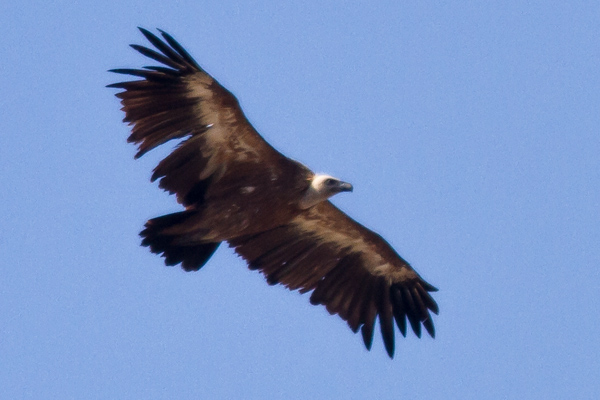
 Eurasian Griffon

 Gull-billed Tern

Rufous-tailed Scrub Robin

Cattle Egret

An enjoyable afternoon was taken up with a visit to the Audouin’s Gull breeding colony in the Ria Formosa. This species began breeding in the Algarve in 2001 and it’s amazing that there are now estimated to be 1,800 pairs here.  Forty years ago the global population was estimated to be only 1,000 pairs! The population has expanded owing to increased availability of fisheries discards close to key breeding colonies, something that could in future be affected by the EU Common Fisheries Policy. We managed to read a few colour-rings including some indicating that the birds originated from the Ebro Delta in Spain, site of the largest colony in the Mediterranean. There is also a substantial breeding colony of Yellow-legged Gulls on the island.

 Audouin's Gull

 Yellow-legged Gulls

Sunday, 20 September 2015

Last week's birding

We're now settled back into our routine here in the Algarve and we've just  enjoyed an excellent week of birding. Migrants are on the move, it's been a particularly good week to see eagles and there's been much more besides.

Spanish Imperial Eagle

Our two visits to the Castro Verde area in the Baixo Alentejo gave us multiple sightings of Short-toed, Bonelli's, Golden & Spanish Imperial Eagles - enough to make anyone's day!  It would have been nice to have come across the Steppe Eagle that has recently been reported but maybe that was too much to ask for.  Other raptors we did see up there included Black-winged Kites, Griffon Vultures and Eurasian Black Vultures so there were no complaints.

 Short-toed Eagle

As usual at this time of the year, Great Bustards were relatively few and we failed to find any Little Bustards at all.  In an area where hundreds of them nest, there wasn't a White Stork to be seen but we watched a party of seven Black Storks over São Marcos da Ataboeira.  Most of the summer visitors such as Golden Orioles, Collared Pratincoles, Bee-eaters and Rollers have left but a couple of Black-eared Wheatears remained.

After a scorching hot summer the plains are baked dry and for many birds food must be scarce.  Most of the rivers and streams are now dry but there are quite a number of ponds and small reservoirs that still contain some water.  Green Sandpipers and Common Snipe winter around these reservoirs and both species are already in residence. A few passage waders also occur at these waters and we found Dunlin, Common Sandpiper, Greenshank and Ringed Plover.  We also saw Greater Flamingos and Spoonbills which somehow seem a little out of place here away from the coastal wetlands.

 Spoonbills

The eagles we saw in the Algarve were of course Booted Eagles, several of them at a regular site with two Black-winged Kites roosting nearby.  At Quinta do Lago, Little Bitterns, Glossy Ibises and Purple Swamp-hens were easy to see and a Water Rail made a brief appearance.  At Santa Luzia a juvenile Red-necked Phalarope brought to 25 the number of wader species recorded during the week; Audouin's & Slender-billed Gulls were also there.  At Olhão there were Mediterranean Gulls plus Caspian, Little, Common & Sandwich Terns and near Tavira we found what is presumed to be a hybrid Little x Western Reef Egret, a bird that has been in the area for several weeks.

  Booted Eagle

 Audouin's Gull

Red-necked Phalarope

Presumed hybrid Little x Western Reef Egret

An adult Spanish Imperial Eagle was our main reward for making the long trip to the Doñana area in neighbouring Spain.  There were also several Booted Eagles.  Again here it was a matter of finding some water in order to find a few birds as the whole place was parched dry and unrecognisable compared to how we see it in the spring and early summer. A few Black Storks, Great Egrets and Night Herons were seen as well as numerous Grey Herons, Cattle & Little Egrets but apart from Green Sandpipers and Black-winged Stilts there few waders and the day was generally disappointing.


Spanish Imperial Eagle

Everywhere we have been there have been at least a few passerine migrants, including Common Whitethroat, Northern Wheatears, Whinchats, Tawny Pipits, Pied  & Spotted Flycatchers, Chiffchaffs, Willow & Subalpine Warblers and Common Redstarts and we can expect more of the same during the coming weeks.  Maybe this will be the year for another North American passerine - we can but hope!

 Tawny Pipit

Whinchat

Monday, 29 April 2013

Windy Day

Left to our own devices we might well have stayed home yesterday.  From just a quick look at the weather forecast we could see that it would be a difficult day for birds and birdwatchers with winds of 20mph or more from the NNW.  It was going to be cold and birds were going to be sheltering and hard to see.

However, arrangements were made and we were committed: June to a half day visit to Castro Marim, Peter to a full day in the Castro Verde area in the Baixo Alentejo.

The star bird at Castro Marim was undoubtedly the female Red-necked Phalarope that June found at Cerro do Bufo.  Like many of the other waders here now it was a bird that is moulting into its breeding plumage.  It is only the second of this species that we have seen in the Algarve and is sufficiently rare here that it will require a submission to the Comité Português Raridades.


As well as a dozen other wader species, the supporting cast included Little Bustard, Golden Oriole, Great Spotted Cuckoo, Greater Flamingo, Montagu’s Harrier, Red-rumped Swallow, Woodchat Shrike, Hoopoe and Azure-winged Magpie, some of these very common birds to us but much appreciated by visitors who are here for only a week.

Up in the Alentejo, the day’s bird list included most of the target species but raptors in particular were in short supply and there was only a quick glimpse of Black-bellied Sandgrouse.  Highlights, again from a visitor’s perspective, were Collared Pratincoles, Griffon & Black Vultures, Spanish Imperial Eagle, Rollers, Lesser Kestrels, Great & Little Bustards, Short-toed Eagle, Calandra Lark and Montagu’s Harriers.  However, finding birds was hard work and the area's other attractions including the continuing spectacular display of wildflowers were a welcome diversion.