Showing posts with label House Martin. Show all posts

Saturday, 21 May 2016

Back into our routine

With Peter now back in the Algarve after his travels for Avian Adventures we have returned this week to our usual routine that includes birding in both the Algarve and Baixo Alentejo, some photography and some reading of colour-rings.

We began on Monday with a trip to the salinas at Olhão where two Red-necked Phalaropes had been seen during the previous few days. This species is classified as a rarity here and is always a delight to see. With good directions we easily found one of them but have to assume that the other one had departed.

 Red-necked Phalarope
Whilst in the Olhão area we called in at Quinta de Marim. This was partly to see our friends at RIAS but also to have a look for a Marbled Duck that had been seen and photographed on the small freshwater pond there. Marbled Duck is a species that many visiting birders want to see and ask us to find for them, presumably not realising what a scarce bird it has become in Iberia. The last record in the Algarve was in January 1997!

Marbled Duck

It used to be that they could be found across the border in Doñana but relatively few remain there and they aren’t easy to find. The breeding population is very small and has undergone a large and rapid decline because of destruction and degradation of breeding habitat. Many of the wetlands in North Africa where they spend the winter have also beeen destroyed.

Marbled Duck

When we found the duck it was quickly obvious that it had a yellow ring on its right leg and this it would seem is evidence that it originates from a Spanish re-introduction project. For more precise details it will be necessary to read the inscription on the ring, something that won’t be easily achieved!

We did hear that there had been a report of two Marbled Ducks at Quinta de Marim, which together with the secretive behaviour of the bird we saw has given rise to speculation that a breeding attempt might be in progress. Now that would be exciting!

A morning out around Tavira with the camera resulted in some pleasing portraits of European Bee-eaters. We also spent some time at a small puddle where Serins and Goldfinches were drinking and bathing and House Martins were collecting mud.

 European Bee-eater

House Martin

We spent a full day in the Castro Verde area where we saw most of the expected species including thirteen raptor species, European Rollers and both Little & Great Bustards. Rufous-tailed Scrub Robins (aka Rufous Bush Chats), Collared Pratincoles, Cattle Egrets and Gull-billed Terns were also getting on with the business of breeding. We also saw four Mute Swans but we’re not sure what they were doing there!
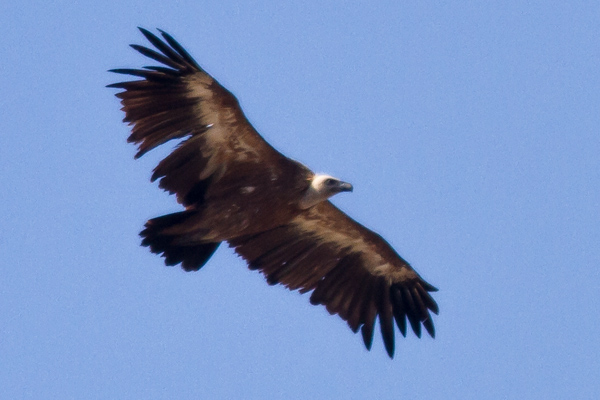
 Eurasian Griffon

 Gull-billed Tern

Rufous-tailed Scrub Robin

Cattle Egret

An enjoyable afternoon was taken up with a visit to the Audouin’s Gull breeding colony in the Ria Formosa. This species began breeding in the Algarve in 2001 and it’s amazing that there are now estimated to be 1,800 pairs here.  Forty years ago the global population was estimated to be only 1,000 pairs! The population has expanded owing to increased availability of fisheries discards close to key breeding colonies, something that could in future be affected by the EU Common Fisheries Policy. We managed to read a few colour-rings including some indicating that the birds originated from the Ebro Delta in Spain, site of the largest colony in the Mediterranean. There is also a substantial breeding colony of Yellow-legged Gulls on the island.

 Audouin's Gull

 Yellow-legged Gulls

Thursday, 12 June 2014

Hot Summer Days

We don’t expect to have much rain at this time of the year.  The average amount for the month of June here in Tavira is only about 8mm.  There was a brief shower a few nights ago but any trace of it was gone by morning and many people won’t even have noticed it.

Recently, temperatures have been rising to around 25ºC most days but the forecast shows an expected high at the weekend of a toasty 32º.  Everywhere the land looks baked and parched, a situation that is unlikely to change until well into September at the earliest.


If you’re a House Martin wanting mud for your nest, it’s definitely not much fun!  Mud is in short supply!  Of course, the breeding season for House Martins started early here; many birds were back in February and some didn’t leave at all, managing to find enough insect food in the Algarve through the ‘winter months’.  By now most will have raised at least one brood if not two.  But still there are birds that are busy collecting mud.  Probably they are repairing nests rather than building new ones from scratch, but who knows?


We always enjoy watching and photographing birds that are attracted to fresh water, whether they are collecting mud or just drinking and bathing.  Migration seasons give more chance for something unusual to show up but even now there can be a good selection of species.  The common seed-eating finches, Serins, Goldfinches, Greenfinches and Linnets, are the most regular but, as well as the House Martins and an occasional Barn Swallow, we have had Spotless Starlings, Blackbirds, House Sparrows, Collared Doves, Azure-winged Magpies and Yellow Wagtails.


It’s been both enjoyable and frustrating to sit watching these birds and at the same time listen to Nightingale, Blackcap, Cetti’s Warbler, Reed Warbler and Common Waxbill, all of them just a few metres away but none showing any inclination to come out for a bath and a photo session!


We haven’t been spending all our time cooped up in the car taking photographs - for one thing, it’s far too hot!  We’ve also spent time in the Castro Verde area watching Rollers, Lesser Kestrels, Collared Pratincoles and more, many of them feeding young.  And yesterday we helped with the monthly count of the birds on the Castro Marim Reserve, where the highlights as far as numbers are concerned were 1,200 Greater Flamingos, 780 Black-tailed Godwits, 147 Slender-billed Gulls, 116 Shelducks, 212 Black-winged Stilts and 175 Avocets.  As well as counting, we managed to read quite a number of colour-rings, mostly on Spoonbills and Audouin’s Gulls.

Monday, 27 February 2012

House Martins

The familiar calls of House Martins were a welcome sound that greeted us when we stepped outside yesterday morning. We’ve been seeing a few birds over wetland areas this last week or so but yesterday’s were the first that we’ve seen around home.


In our previous winters here, at least a few House Martins have stayed around here through January and by early February they have been a fairly common sight returning to their nests. In fact last year our first around home were on 27th January. This year we’ve gone weeks without seeing any at all and even now their numbers are very few.

With no significant amount of rain falling here for quite some time we would assume that this must be having an impact on the food supply available to House Martins in the form of flying insects. Perhaps their absence is simply because there is insufficient food. It has been estimated that a House Martin may eat up to 3,000 flies each day!


Another result of the very dry winter is that the ground is baked hard and unless we get some rain these birds are clearly going to face a challenge in finding fresh mud for nest-building. Repairing a previous year's nest would be the easy option for them, perhaps taking no more than a couple of days but if starting from scratch they can take up to 18 days to build a new one.

It was a little disappointing that yesterday’s return of House Martins should prompt someone to put a leaflet in our letterbox (and presumably every other letterbox in the area) offering ‘professional help’ in deterring them from nesting. There’s no escaping the fact that breeding House Matins do make a mess and we can accept that preventing them from nesting is much better than knocking down their nests later on after all their effort in building them. However, it does seem a shame that there should be this immediate adverse reaction when we ourselves were so pleased to hear those buzzing pr-prt calls.