Showing posts with label Eurasian Spoonbill. Show all posts

Friday, 13 October 2017

Piscivore party

An unusual concentration of fish trapped in one of the salt pans here in Tavira has been attracting numerous birds these past few mornings. Up to 80 Spoonbills and about 50 Little Egrets have been joined by smaller numbers of Cormorants, Grey Herons, White Storks and a single Great Egret.


The fish seem to have been of a size to suit these larger birds but both Caspian & Sandwich Terns have been joining in and have presumably been able to find some smaller ones. Gulls, too, have been looking for a cheap meal, a few Lesser Black-backs but mostly Slender-billed and Black-headed.


It’s not an ideal site for photography but it has been hard to resist trying to get some images. I used a Canon EOS 7D Mk ll with a 100-400mm lens and a 1.4x extender but would have liked to get closer.


It was no surprise to find that some of the Spoonbills were colour-ringed but the depth of the water made it difficult to record the details. As so often, taking the ring details from the photographs was the best plan.  Full details are still awaited of the five birds reported but it looks as though three were ringed in The Netherlands and one each in France and Portugal.  One of the Dutch birds we have actually seen here before in 2011 and 2013; it's a female ringed in 1999.


No doubt some of these Spoonbills will stay in the Algarve for the winter but many will find their way to Mauritania and Senegal.

Friday, 6 October 2017

Algarve autumn

After spending much of the summer in the UK in order to avoid the extreme heat of the Algarve we returned here in September to find that it was still pretty warm.  And so it continues with the temperature rising to 30º C again yesterday and there’s continuing, wall to wall sunshine forecast for at least another week.  Not that we’re complaining, of course, but it isn’t ideal weather for long birding days and it isn’t weather that’s been bringing in many of the scarce or rare migrants that we hope for at this time of year.

Having said all that, we’ve been birding most days since our return and it’s been great.  Mostly we’ve been in the Ria Formosa but there have been days around Castro Verde to see the specialities of that area and we have had a couple of trips to Sagres where raptors and seabirds are the main attractions; we also spent some time with the team from Brewood Ringers who had another very successful visit to the Parque Ambiental de Vilamoura.

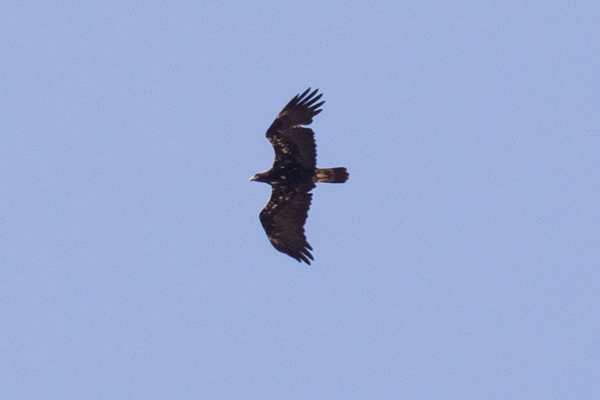
Spanish Imperial Eagle

As always, there’s been lots to see in the Ria Formosa.  It isn’t difficult to find 20 or more shorebird species in a morning around the tidal areas and saltpans and it’s usually possible to see six gull species without too much difficulty.  There was a Pectoral Sandpiper last month and a Red-necked Phalarope but so far nothing more exotic than those.  It’s fair to say that not everyone we take birding shares our enthusiasm for waders and gulls and still we find that Little Bitterns, Black-winged Kites, Western Swamp-hens and Bluethroats are the biggest ‘crowd-pleasers’.

One or two Yellow-browed Warblers have appeared in recent days but rare passerines have otherwise been missing.  In former years the ringers have produced the goods – we remember a Common Yellowthroat, Common Rosefinches, a Paddyfield Warbler and an Aquatic Warbler turning up in mist-nets at Vilamoura in the recent past but this year their success was simply in the actual number of birds they caught and ringed rather than finding rarities – 1903 birds of 56 varieties!  Their efforts once again underline the importance of the Parque Ambiental to a wide selection of migrant species.

 Iberian Green Woodpecker

Common Kestrel

At Sagres we managed to see a reasonable number of raptors but to be honest it would have been nice to view them at closer range.  Some days they come closer to Cabranosa than others and we just haven’t been lucky.  Highlights there so far (and there’s plenty of time left for more) have been two Rüppell’s Vultures and a Lesser Spotted Eagle.  We did get a distant view of the eagle, coincidentally on the same date that we saw a much closer one in 2015.

Highlights among the seabirds have been two Brown Boobies and a Yelkouan Shearwater, both seen from Cape St Vincent.  Whilst there is a nice photograph of the Brown Booby, the shearwater record may not have such an easy passage through the hands of the Rarities Committee.  We went out to sea about nine miles with Mar Ilimitado and on a fairly calm day saw Cory’s, Balearic & Great Shearwaters, European & Wilson’s Storm-petrels, Northern Gannets and just one Great Skua.  Maybe it wasn’t the most productive trip we’ve ever done but it was certainly memorable.  There were close encounters with a Fin Whale, several Striped Dolphins and far more Common Dolphins than we have ever seen before.

 Fin Whale

Common Dolphin

European Storm-petrel

Cory's Shearwater

Five Cory's and one Balearic Shearwater

We continue to read and report inscriptions from colour-rings.  These include the regular rings on Spoonbills and Greater Flamingos but more interestingly we have seen recently a nine year-old Glossy Ibis that was ringed in the Doñana area and which has returned to more or less the exact spot that we saw it in 2010 and 2012.  Also a Slender-billed Gull is back in the same saltpan where we first saw it at this time last year.

Spoonbill (ringed in The Netherlands)

Sunday, 20 September 2015

Last week's birding

We're now settled back into our routine here in the Algarve and we've just  enjoyed an excellent week of birding. Migrants are on the move, it's been a particularly good week to see eagles and there's been much more besides.

Spanish Imperial Eagle

Our two visits to the Castro Verde area in the Baixo Alentejo gave us multiple sightings of Short-toed, Bonelli's, Golden & Spanish Imperial Eagles - enough to make anyone's day!  It would have been nice to have come across the Steppe Eagle that has recently been reported but maybe that was too much to ask for.  Other raptors we did see up there included Black-winged Kites, Griffon Vultures and Eurasian Black Vultures so there were no complaints.

 Short-toed Eagle

As usual at this time of the year, Great Bustards were relatively few and we failed to find any Little Bustards at all.  In an area where hundreds of them nest, there wasn't a White Stork to be seen but we watched a party of seven Black Storks over São Marcos da Ataboeira.  Most of the summer visitors such as Golden Orioles, Collared Pratincoles, Bee-eaters and Rollers have left but a couple of Black-eared Wheatears remained.

After a scorching hot summer the plains are baked dry and for many birds food must be scarce.  Most of the rivers and streams are now dry but there are quite a number of ponds and small reservoirs that still contain some water.  Green Sandpipers and Common Snipe winter around these reservoirs and both species are already in residence. A few passage waders also occur at these waters and we found Dunlin, Common Sandpiper, Greenshank and Ringed Plover.  We also saw Greater Flamingos and Spoonbills which somehow seem a little out of place here away from the coastal wetlands.

 Spoonbills

The eagles we saw in the Algarve were of course Booted Eagles, several of them at a regular site with two Black-winged Kites roosting nearby.  At Quinta do Lago, Little Bitterns, Glossy Ibises and Purple Swamp-hens were easy to see and a Water Rail made a brief appearance.  At Santa Luzia a juvenile Red-necked Phalarope brought to 25 the number of wader species recorded during the week; Audouin's & Slender-billed Gulls were also there.  At Olhão there were Mediterranean Gulls plus Caspian, Little, Common & Sandwich Terns and near Tavira we found what is presumed to be a hybrid Little x Western Reef Egret, a bird that has been in the area for several weeks.

  Booted Eagle

 Audouin's Gull

Red-necked Phalarope

Presumed hybrid Little x Western Reef Egret

An adult Spanish Imperial Eagle was our main reward for making the long trip to the Doñana area in neighbouring Spain.  There were also several Booted Eagles.  Again here it was a matter of finding some water in order to find a few birds as the whole place was parched dry and unrecognisable compared to how we see it in the spring and early summer. A few Black Storks, Great Egrets and Night Herons were seen as well as numerous Grey Herons, Cattle & Little Egrets but apart from Green Sandpipers and Black-winged Stilts there few waders and the day was generally disappointing.


Spanish Imperial Eagle

Everywhere we have been there have been at least a few passerine migrants, including Common Whitethroat, Northern Wheatears, Whinchats, Tawny Pipits, Pied  & Spotted Flycatchers, Chiffchaffs, Willow & Subalpine Warblers and Common Redstarts and we can expect more of the same during the coming weeks.  Maybe this will be the year for another North American passerine - we can but hope!

 Tawny Pipit

Whinchat

Friday, 19 December 2014

It's good to be back!

On Wednesday morning, after a month away from Portugal, which included our Avian Adventures tour in Florida, we were ready again for some Algarve birding.  As is usual when we’ve had time away, we began by spending a few hours checking our local area around Tavira and Santa Luzia. The weather was almost perfect - clear blue sky, temperature up to 18ºC.
  
One of the reasons for being in Tavira is that we particularly enjoy seeing waders and it wasn’t surprising to find 22 species within walking distance from the town centre.  With a bit more effort we might well have added to that total.

 Bar-tailed Godwit

Whimbrel

For once we were able to watch all six of the commonly occurring gull species together in one saltpan.  There seem to be fewer Audouin’s now but probably more Mediterranean than we expected and still a few Slender-billed.   Black-necked Grebe numbers had increased to ten and while we were seeking them out a Marsh Harrier flew through; several Bluethroats and a Little Owl were exactly where we had last seen them in mid-November.

 Slender-billed Gull

Bluethroat

We stayed out until dusk hoping to see a Short-eared Owl but we were out of luck.  For several winters they hunted regularly around the Tavira saltpans but we haven’t seen one here since February 2013.  The day didn’t produce anything exceptional but with little effort and mostly from the car we recorded more than 70 species.

The only really notable bird that has occurred here while we were away was a Red-breasted Flycatcher that was found at the edge of the golf course at Quinta do Lago on 12th December.  This is a comparatively rare species in the Algarve with only about seven previous records and none quite this late in the year.  Thanks to Simon Wates, we saw one in November 2009 at Figueira but the possibility that this recent bird might still be in the area was all the excuse we (and Ray Tipper) needed for an early start yesterday for a trip to Ludo and Quinta do Lago.

One of the first birds that greeted our arrival there was a Booted Eagle and it proved to be just the first of at least nine of these lovely birds that we counted in our first half hour.  Just as impressive in their own way were 20 or more Grey Herons standing together in the soft morning light, dwarfing the Little Egrets that were sharing the same plentiful food supply.

Little Egret

Spoonbill

Nearby several Spoonbills marched purposefully away from us, three sporting an array of colour-rings details of which we have since reported.  Duck numbers had increased since our last visit; Wigeon and Teal were particularly vocal, sounds that we once associated with cold or damp winter mornings at Belvide Reservoir in Staffordshire!  There was the usual good selection of waders with Black-tailed Godwits and Dunlin the most numerous; a Kingfisher flashed past and several Cetti’s Warblers called loudly. 

Around the golf course we found a couple of Hoopoes and two Mistle Thrushes and from the pines we could hear the calls of Short-toed Treecreeper.  Most of the birds in the surrounding trees were Chiffchaffs but eventually the Red-breasted Flycatcher appeared, albeit briefly.  It hardly stayed still for more than a few seconds and quickly disappeared.  We had to wait quite a while before we saw it again but then we were able to watch it for more than half an hour as it flitted from pine to eucalyptus to olive finding the tiniest food items.  We wonder how long it will stay!

Red-breasted Flycatcher

There was time on the way home for a quick look at the saltpans near Olhão.  Amongst the Mediterranean Gulls there we managed to read two colour-rings, one from France and one from Hungary.

When we got back to Tavira there was only one way to round off a successful morning - lunch at Restaurante Ana!  It really is good to be back!

Saturday, 30 June 2012

Castro Marim

We’ve spent three mornings this week at and around the Reserva Natural do Sapal de Castro Marim e Vila Real de Santo António, which not surprisingly we tend to refer to simply as Castro Marim.  Not only is this one of the most productive birding sites in the Algarve but it also has the attraction for us that it is reasonably close to our base in Tavira and can be reached fairly quickly without incurring road tolls.

It’s getting to be quite warm here now with temperatures rising to 30ºC and higher by mid-morning, so early starts have become an essential part of our routine.  Breakfast has been accompanied by the ‘cut-ock, cut-ock’ song of Red-necked Nightjars and the calls of Little Owls, two birds that get the day list off to a good start before leaving home.


Castro Marim is primarily a wetland area and we have mentioned before that we recently counted almost 1,600 Greater Flamingos there.  We haven’t counted them this week but have no reason to think that there are any fewer than that number.  There is more to the reserve than just saltpans but they are a major attraction and already many Spoonbills and waders are returning, birds that have been north to breed or perhaps have suffered a failed breeding attempt.  Most numerous of these are Black-tailed Godwits but Dunlins, Grey Plovers and Ruddy Turnstones have also been seen and we were particularly pleased to see and hear the return of our favourite, Greenshanks and Green Sandpipers.


The local breeding waders, Kentish Plovers, Avocets, Black-winged Stilts and Stone-curlews all have young, some of them now well-grown.  A month or so ago, we saw a pair of Little Ringed Plovers with young on the reserve and it seems likely that Common Redshank have also nested in the area.


Gulls seen this week have been just the usual Yellow-legged, Slender-billed and Audouin’s.  Little Terns are numerous but it seems that they may not have had much breeding success.  Up to three non-breeding Caspian Terns have remained in the area and a flock of 18 Black Terns passed through on Tuesday.  Sightings of Collared Pratincoles have been popular and several pairs are assumed to be breeding.


We read somewhere in one of the guide books to the Algarve that there are few raptors here other than those seen at Sagres during the autumn period and that seeing anything other than a Common Buzzard or a Common Kestrel could be considered a bonus.  Well, we must have been very lucky this week with seven species seen just at Castro Marim!  A Black-winged Kite near Tavira made eight species.


We are still finding one or two Glossy Ibises in unexpected places and Castro Marim is no exception.  Several Purple Herons are being seen around the reserve which may also be birds displaced from Doñana.

Other highlights of the week at Castro Marim have been a pair of Purple Swamp-hens, singing Golden Orioles, a pair of Spectacled Warblers feeding young, Bee-eaters going backwards and forwards in and out of nest holes, several pairs of White Storks with young, Woodchat Shrikes, Southern Grey Shrikes, Little Bustards and what appeared to be a family party of four Common Ravens.


It is disappointing that ICNB have found it necessary to stop access to the Cerro do Bufo sector of the reserve and we miss doing the circular walk there that was part of our weekly routine.  Still, we have adapted to the change and we hope that visiting birders will also respect the restrictions – there are plenty of birds to be seen without the need to trespass!  

Friday, 18 November 2011

On Our Travels...

We’re in the UK for a few days, preparing for an Avian Adventures tour in Ethiopia. There were long range forecasts of freezing weather here, so it’s a relief that it’s actually quite mild currently with temperatures up to 12°C. It’s still a bit of a shock to the system, though, for 'southern European softies' like us and we’re definitely hoping for some African sun next week. At the same time, we’re packing plenty of warm clothes for our days in the mountains.

Earlier this week we enjoyed what will be our last day this year of birding and guiding in the Algarve. An excellent day was spent around Ludo, Quinta do Lago, Olhão, Santa Luzia and Tavira recording a total of more than 90 species.

Slender-billed Gull

Highlights included at least 7 Booted Eagles, 2 Black-winged Kites, an Osprey, a Bluethroat, Slender-billed & Audouin’s Gulls, 23 wader species, more than 60 Stone-curlews, 3 Caspian Terns, a Blue Rock Thrush, 3 Black-necked Grebes and, of course, the always popular Purple Swamp-hens. Also notable for us were a Pied Wagtail, a sub-species that isn’t particularly common in the Algarve, and a Spanish colour-ringed Spoonbill that we had seen before in exactly the same place two years ago.

Purple Swamp-hen

Black-tailed Godwit

Although we're obviously looking forward to our travels, it's been a bit of a wrench leaving the Algarve where the birding can be so good at any time of the year and where we really enjoy spending what passes for winter.

Audouin's Gulls

Green Sandpiper

Look out for some photographs from Ethiopia in about three weeks time!