Showing posts with label European Storm-petrel. Show all posts

Friday, 6 October 2017

Algarve autumn

After spending much of the summer in the UK in order to avoid the extreme heat of the Algarve we returned here in September to find that it was still pretty warm.  And so it continues with the temperature rising to 30º C again yesterday and there’s continuing, wall to wall sunshine forecast for at least another week.  Not that we’re complaining, of course, but it isn’t ideal weather for long birding days and it isn’t weather that’s been bringing in many of the scarce or rare migrants that we hope for at this time of year.

Having said all that, we’ve been birding most days since our return and it’s been great.  Mostly we’ve been in the Ria Formosa but there have been days around Castro Verde to see the specialities of that area and we have had a couple of trips to Sagres where raptors and seabirds are the main attractions; we also spent some time with the team from Brewood Ringers who had another very successful visit to the Parque Ambiental de Vilamoura.
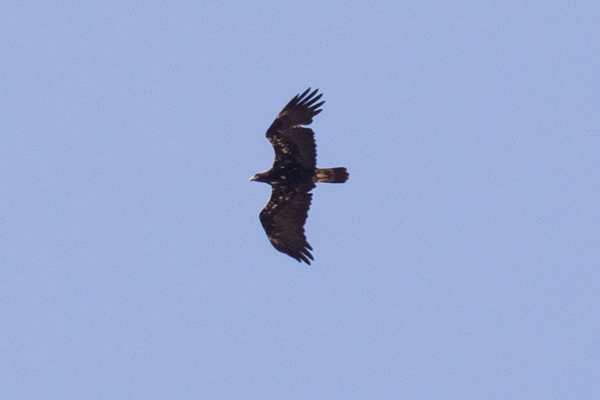
Spanish Imperial Eagle

As always, there’s been lots to see in the Ria Formosa.  It isn’t difficult to find 20 or more shorebird species in a morning around the tidal areas and saltpans and it’s usually possible to see six gull species without too much difficulty.  There was a Pectoral Sandpiper last month and a Red-necked Phalarope but so far nothing more exotic than those.  It’s fair to say that not everyone we take birding shares our enthusiasm for waders and gulls and still we find that Little Bitterns, Black-winged Kites, Western Swamp-hens and Bluethroats are the biggest ‘crowd-pleasers’.

One or two Yellow-browed Warblers have appeared in recent days but rare passerines have otherwise been missing.  In former years the ringers have produced the goods – we remember a Common Yellowthroat, Common Rosefinches, a Paddyfield Warbler and an Aquatic Warbler turning up in mist-nets at Vilamoura in the recent past but this year their success was simply in the actual number of birds they caught and ringed rather than finding rarities – 1903 birds of 56 varieties!  Their efforts once again underline the importance of the Parque Ambiental to a wide selection of migrant species.

 Iberian Green Woodpecker

Common Kestrel

At Sagres we managed to see a reasonable number of raptors but to be honest it would have been nice to view them at closer range.  Some days they come closer to Cabranosa than others and we just haven’t been lucky.  Highlights there so far (and there’s plenty of time left for more) have been two Rüppell’s Vultures and a Lesser Spotted Eagle.  We did get a distant view of the eagle, coincidentally on the same date that we saw a much closer one in 2015.

Highlights among the seabirds have been two Brown Boobies and a Yelkouan Shearwater, both seen from Cape St Vincent.  Whilst there is a nice photograph of the Brown Booby, the shearwater record may not have such an easy passage through the hands of the Rarities Committee.  We went out to sea about nine miles with Mar Ilimitado and on a fairly calm day saw Cory’s, Balearic & Great Shearwaters, European & Wilson’s Storm-petrels, Northern Gannets and just one Great Skua.  Maybe it wasn’t the most productive trip we’ve ever done but it was certainly memorable.  There were close encounters with a Fin Whale, several Striped Dolphins and far more Common Dolphins than we have ever seen before.

 Fin Whale

Common Dolphin

European Storm-petrel

Cory's Shearwater

Five Cory's and one Balearic Shearwater

We continue to read and report inscriptions from colour-rings.  These include the regular rings on Spoonbills and Greater Flamingos but more interestingly we have seen recently a nine year-old Glossy Ibis that was ringed in the Doñana area and which has returned to more or less the exact spot that we saw it in 2010 and 2012.  Also a Slender-billed Gull is back in the same saltpan where we first saw it at this time last year.

Spoonbill (ringed in The Netherlands)

Saturday, 10 October 2015

Autumn update

Some heavy rain today has put a stop to birding activity and so gives us a chance to report on the past two weeks.  It has to be said that the rain is much needed and welcome unless, of course, you have just arrived here for a holiday!

We’ve had two further trips to Sagres where we have been lucky to see a good selection of raptors with a Lesser Spotted Eagle being the star bird.  This species was first reported in Portugal in 2009 and was also seen in 2011, 2012 and 2013.  All of these records have come in the autumn from the Sagres area so this year’s bird wasn’t a complete surprise.  It was seen over a period of several days.

During the time we have spent at Cabranosa, the popular viewpoint, we have seen around a dozen other raptor species and quite a number of Black Storks - counting birds here isn’t an exact science as they circle around the area, going out of sight and then re-appearing.

Black Stork

There were also been plenty of passerine migrants in the Sagres area.  We saw Ortolan Buntings, Northern Wheatears, Pied & Spotted Flycatchers, Yellow Wagtails, Common Redstarts and a decent selection of common warbler species.  We also found a few Choughs.

Northern Wheatear

Red-billed Chough

An afternoon boat trip on 2nd October produced good numbers of seabirds.  We estimated 300 Cory’s and 50 Great Shearwaters but no more than a handful of Balearics and just three Sooty Shearwaters.  A couple of Great Skuas came close to the boat and about 10 European Storm-petrels were counted.  There was just one brief sighting of a Wilson’s Storm-petrel.  Gannets were surprisingly few.

Cory's Shearwater

Great Shearwater

European Storm-petrel

We’ve also been in the Castro Verde area a couple of times.  On both occasions we saw four eagle species (Spanish Imperial, Golden, Bonelli’s & Short-toed) while other raptors have included Griffon & Black Vultures, Black-winged Kite, Red Kite and Hen Harrier.  The biggest surprise was to see two Mute Swans on a small reservoir near Alvares, the first time we have seen this species in Portugal other than as ornamental birds on golf courses.  Where they have come from is anyone’s guess!

Mute Swans

In the Algarve we have made multiple visits to Lagoa dos Salgados where we watched 500 Glossy Ibis flying into roost one evening and where we helped a couple of people who were understandably struggling to identify a Fulvous Whistling Duck that couldn’t be found in their field guide - another bird of unknown origin!  The star bird here though was a White-winged Tern, seen in the company of a Black Tern for instant comparison.

We made two trips to see the team of ringers from the UK who were at the Parque Ambiental de Vilamoura for their ninth annual visit.  No major rarities were caught this time but it’s always instructive to see birds in the hand and we met up with old friends.  A full report on the week’s ringing should appear in due course on their website.  Ferruginous Ducks, Booted Eagles and a Black-crowned Night Heron were species seen there but not ringed!

 Cetti's Warbler

Ferruginous Duck

A Temminck’s Stint near Faro was probably the highlight amongst the many waders we have seen recently.  Although not a rarity in the strict sense, it’s a species that we have seen less often here than some that we do have to submit a description for!

Temminck's Stint

Needless to say, we have also been birding around Tavira and Santa Luzia, at Ludo and Quinta do Lago, at Olhão and at Castro Marim and, of course, we have been reading and reporting colour-rings.  

Saturday, 22 September 2012

More seabirding

If anything, this morning's pelagic trip was even better than the one I reported on earlier in the week.  Again it was from Fuseta, it was the same boat and we were out in the same area of ocean for the same amount of time and again the sea was flat calm.  However, today there were even more species seen than there were on Tuesday and the sun shone throughout making for some generally more pleasing photographs.

As well as numerous Northern Gannets and Cory's Shearwaters, the bird list included Great Shearwater, Balearic Shearwater, Great Skua, Pomarine Skua, Arctic Skua, Common Tern, Black Tern, Sabine's Gull, Audouin's Gull, Little Gull and Black-legged Kittiwake, European Storm-petrel and Wilson's Storm-petrel.

We saw fewer European Storm-petrels than on Tuesday but most of the others appeared in increased numbers and there were three additional species with the Kittiwake in particular being somewhat unexpected.

Tuesday was a 7-gull day.  Well, with Mediterranean and Slender-billed seen in Tavira on the way home, today was a 9-gull day.  Surely that must be an Algarve record!


Tuesday, 18 September 2012

Seabirding

This morning’s pelagic trip from Fuseta was one of the best that I’ve experienced in the Algarve in terms of the numbers of species recorded even if the actual number of birds wasn’t exceptional.

The trip lasted just three hours during which time we went no more than about five miles from land, so hardly ‘pelagic’ really.  Surprisingly, no chum was used; it wasn't necessary - we simply headed out to find a fishing boat and that’s where most of the birds were.

The one major downside was that after weeks of uninterrupted sunshine it had to be today that started with 100% cloud cover.  Not until the trip was all but over did the sun put in an appearance.  As a result, photography was difficult to say the least and the results disappointing.


Highlights were Cory’s, Balearic & Great Shearwaters, Wilson’s & European Storm-petrels, Little, Black, Common & Sandwich Terns, Great & Pomarine Skuas, Sabine’s & Audouin’s Gulls.

I might have to go again!

After lunch back in Tavira, we were able to make it a 7-gull day with the addition of Slender-billed and a 5-tern day with the addition of Caspian.

Monday, 13 September 2010

Portimão pelagic

September is probably the best month for pelagic trips off the Portuguese coast and yesterday a group of ten of us enjoyed an excellent 7-hour 'voyage' from Portimão aboard the catamaran Ecoceanus. The sea was calm and the sky almost cloudless - it was a day when any concerns about seasickness could be cast aside!

This was a longer trip than those we have done in previous years from Sagres. The plan was to go out to the edge of the continental shelf where the depth of water increases to something like 300 metres with the expectation that we would find more birds there. This proved to be successful to the extent that we found many more storm-petrels than previously but the numbers of shearwaters and skuas seen was a bit disappointing. However, there were no complaints - who would complain after seeing countless European and 50 or more Wilson's Storm-petrels? And then there was the Minke Whale, a brief but really close look as it broke the surface less than 50 metres from the boat.


The day's bird list included Cory's, Balearic and Sooty Shearwaters, Northern Gannets, of course, Great Skuas, Sandwich, Black and Common Terns. Perhaps the most surprising species was Northern Wheatear, an individual that landed on the boat for just a few seconds, presumably heading for North Africa.

For most of us the Wilson's Storm-petrels were the highlight of the day; we were able to watch a flock of them feeding and although we couldn't hear them, with the aid of a parabolic reflector and headphones, Magnus Robb actually made some sound recordings. He described their calls as being like those of small waders - Little Stints or Sanderlings.


All in all, an excellent day!

Monday, 5 October 2009

Another Sagres pelagic trip

Pelagic trips from Sagres with Mar Ilimitado have become a feature of autumn here in the Algarve and are something to which we look forward. Yesterday's three hours or so aboard Ricardo Silva's boat, Kogia, were particularly enjoyable as the sea was flat calm and the sky almost cloudless, a marked contrast to some pelagic trips we've been on!

Ricardo specialises in dolphin-watching trips so it was no surprise that Common Dolphins were the first species that we came upon. This one was photographed while it was completely submerged, just alongside the boat.


We hoped to find a fishing boat that was already attracting seabirds, perhaps including storm-petrels and shearwaters but the only boat we saw had only Northern Gannets and gulls in attendance.


Northern Gannet

Yellow-legged Gull

Later we did see a couple of Sooty Shearwaters, a few Balearic Shearwaters and 50 or more Cory's Shearwaters but for a while we had to be content to watch Gannets and it was a chance to put the new Canon 50D through its paces.


Several European Storm-petrels and a Wilson's Storm-petrel were seen but none came very close and they presented a much more difficult subject. Great Skuas were impossibly distant to photograph.

European Storm-petrel

All of the day's gulls were Yellow-legged and Lesser Black-backed except for this lone Mediterranean Gull.

For us this was a new view of the lighthouse at Cape St Vincent, the south-westerly tip of mainland Europe.

We probably didn't go more than about 10 miles from land all morning but the only time we found shearwaters in any numbers they were quite close to the shore. These two were amongst a raft of 50 or so Cory's Shearwaters that included one bird identified as being of the slightly smaller Mediterranean race known as Scopoli's Shearwater.


When we were about one kilometre of the tip of the peninsula and intent on looking for shearwaters, it was a surprise to see flying overhead five Booted Eagles and a Honey-buzzard. Going in a south-westerly direction, these birds presumably thought they were heading for Africa. Let's hope it wasn't too long before they realised their mistake!