Sunday, 15 May 2011

A Bit of Luck!

After three weeks away from the Algarve I was keen to catch up with the local Bee-eaters here in Tavira and try to get a few more photographs.


Sitting in the car for long periods when the temperature is above 27° isn't everyone's idea of fun but yesterday brought its reward! Not only did I get some Bee-eater photographs but I had almost unbelievable luck when an Osprey landed nearby complete with a fish! It didn't stay long but it was long enough to capture the moment in pixels and it was well worth the extreme discomfort.


Mid-May seems very late for a migrant Osprey heading for Northern Europe. As far as we know, it's been quite a while since the species attempted to breed in Portugal but with Ospreys having re-colonised neighbouring Andalucia in recent years and breeding only about 80 km away from here, maybe we should expect to see more of them in the summer months. Perhaps we should think about providing them with a nesting platform here in the Algarve or ask one of the White Stork pairs at Castro Marim to move over.

Meanwhile, I'll thank those Bee-eaters to wipe the mud off their bills in future before coming to portrait sessions!

Wednesday, 11 May 2011

Arizona tour

Peter writes:
I’m just back from Arizona and another successful birding tour in the Grand Canyon State. The itinerary was the familiar one that we have been using for several years now. It included Tucson (Sabino Canyon, Sweetwater Wetlands and Mount Lemmon), Portal (Cave Creek Canyon), Sierra Vista (San Pedro Riparian National Conservation Area, Garden, Huachuca, Ramsey & Miller Canyons), Green Valley (Madera Canyon), Sedona (Oak Creek Canyon) and finally the Grand Canyon itself.

In contrast to last year, the weather was mostly very warm and we found everywhere to be very dry after a winter with little rain. It was also quite windy on occasions. These are conditions that give rise to an extreme risk of fires and since my return there has been a major outbreak in the Chiricahuas which is affecting about 10,000 acres near Portal. It has threatened Cave Creek Canyon and quite a number of homes in the area have been evacuated. Currently, it is reported that the fire is 10% contained and that the Forest Service has 343 people fighting it. Up to date news of the fire can be found here.

As in 2006, our tour coincided with the passage through Arizona of thousands of Wilson’s Warblers heading north from Mexico and Central America to breed in Canada and the Pacific North-West. There were times, particularly along the San Pedro River, when we were almost in danger of stepping on them! Audubon’s (Yellow-rumped) Warblers were also numerous.

Wilson's Warbler...

...and another Wilson's Warbler

Audubon's Warbler

Empidonax flycatchers were abundant and gave us repeated identification challenges! With the popular field guides (Sibley, Kaufmann, National Geographic) saying that Cordilleran and Pacific-slope Flycatchers are identical in appearance and separable only by the call of the male, it is probably best to call them ‘Western’ Flycatchers, as they were before being split in 1989. There are many who still regard this as a ‘bad’ split and I can understand why! Dusky and Hammond’s Flycatchers probably are separate species but they, too, are very difficult to separate.

'Western' Flycatcher

Hammond's Flycatcher - I think!!

Fortunately, there were also plenty of brightly-coloured and easily identifiable birds to see, which is what you want, particularly if, like some of our group, it’s your first visit to the USA. Not everyone on a birding tour wants to spend time agonising about the identity of lots of small, grey, brown or olive-green birds! So, Painted Redstart, Elegant Trogon, Hooded, Scott’s and Bullock’s Orioles and Western Tanagers were popular.

Elegant Trogon

Western Tanager

Greater Roadrunner and California Condor were two of the ‘most-wanted’ species and although it would have been a major surprise if we hadn’t seen them, both took a little longer to present themselves than I would have liked. There are now reported to be 74 Condors living in the wild in Arizona and as a result of captive breeding, the total population has increased dramatically from 22 birds in 1987 (the brink of extinction) to 369 birds in 2011.

Greater Roadrunner

California Condor

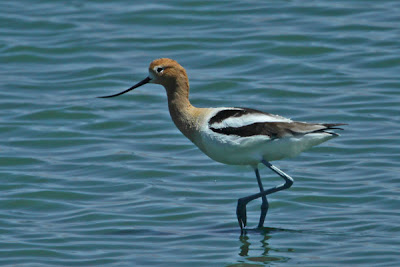
Our total bird list fell just short of 200 species, about par for the course. As always, among my own personal favourites were the waders (shorebirds if you’re reading this in the USA). They included Willets, Wilson’s Phalaropes, American Avocets, Long-billed Dowitchers, Lesser Yellowlegs, Solitary Sandpipers and, of course, Killdeers.

Willets

American Avocet

Solitary Sandpiper

Killdeer

We are hoping to be back in Arizona (and California) at the end of the year when we lead the Avian Adventures Christmas tour across the deserts from San Diego to Tucson.

Monday, 9 May 2011

White-rumped Swift

White-rumped Swifts breed in much of sub-Saharan Africa and we have seen then regularly when leading tours in Uganda and Tanzania and in South Africa, Botswana and Zimbabwe. They also now occur in Morocco and the Iberian peninsula; the first record for Portugal was in 1983 and the first confirmed breeding here was in 1995.

Although this is still a scarce breeding species in Portugal, it does seem to be well established. We know of only four breeding sites but there must surely be more and we hope to find time during the next few weeks to try and locate them.

Because of the birds’ comparative rarity in Portugal we have been reluctant in the past to take anyone to see them and have declined several requests. However, we know that other guides have taken a different view and perhaps this is understandable given that details of several breeding sites have now been published. Recently, the Portuguese Rarities Committee (Comité Português Raridades) removed White-rumped Swift from its list of species requiring approval.

Against this background we have decided this year that we will be open to requests to see White-rumped Swifts and, in fact, we have already in the last couple of weeks provided two clients with great views of these attractive little birds.

Attractive they may be, but they do take over the nests of other birds, not necessarily waiting until the original occupants have finished with them! In Africa, Little Swifts and Wire-tailed Swallows are among those who give up their nests; in Portugal, it is Red-rumped Swallows that are the victims. Red-rumps nest under bridges and culverts and on other man-made structures and they are quite common here. White-rumps therefore have plenty of nests to choose from and so it probably won’t be easy for us to find new sites.

Tuesday, 19 April 2011

Tavira Bee-eaters

We're lucky to have a colony of European Bee-eaters just a five minute drive away. They're busy excavating nest holes at the moment and we're looking forward to watching their progress over the coming weeks.


They really are such beautiful birds that it's hard to imagine that they are persecuted and treated as pests in so many places, including Portugal. Maybe we would take a different view if we kept bees!

Of course, they eat much more than just bees but their diet does consist mostly of flying insects of one sort or another. We did see one this week, however, that was feeding on the ground, apparently taking ants.


Wednesday, 13 April 2011

Tavira Owls

Little Owls are really quite common in these parts and most of the time very easy to find.


This particular bird is one we know very well. It’s a bird that we have seen regularly in the same tree for the past six months or more. It lives only a short distance from the Tavira Gran-Plaza and every day many people walk, ride and drive past within just a few metres without even seeing it, which is a shame. The owl is only occasionally disturbed by passers-by, sometimes jumping up a little higher in the tree or hiding behind the foliage. Mostly it just sits there!

When we first came to Tavira we thought Little Owls might be the only owl species in the area and it was a while before we even saw a Barn Owl. We have now seen (or in one case heard) six species of owls within less than a kilometre of the town centre. It just goes to show! What does seem very unlikely though is that there will ever be a seventh but who would bet against it?

Saturday, 9 April 2011

Doñana

Yesterday we crossed the border into Andalucia and spent the day in the Doñana area. It was only our third visit there this year but our second this week! In January we managed to choose a foggy day, last Sunday it was cloudy and it rained; at last, yesterday was sunny and warm!

Squacco Heron

White Stork

We often wonder what the Algarve would have been like for birding 50 years ago, before the tourism industry took it over and destroyed so much of the habitat. To some extent that same question about Doñana is answered by Guy Mountfort’s book, Portrait of Wilderness, an account of three expeditions to the area in the 1950s which helped establish the Doñana National Park as one of western Europe's outstanding natural areas. Doñana is unrecognisable now as the wilderness that was explored by Mountfort and his colleagues. Since those days, the area has suffered, like the Algarve, from tourist development and human encroachment, wetlands have been drained, river water has been diverted to boost agricultural production and there is also pollution from surrounding agriculture. In 1998, the area was threatened by a huge spill of toxic sludge from a reservoir at the Aznalcollar mine into the Guadiamar River. Having identified such a wonderful area and recognised its importance for wildlife, how could it be possible to allow so many negative impacts to continue over the following 50 years?

Northern Wheatear

Black Kite

The good news is that, in spite of everything, Doñana is still a wonderful area for birds and other wildlife. There may be times when it is dry and maybe seems rather uninteresting but right now it is teeming with birds, many that are there to breed and many that are just passing through. We had a great day and the question now is how soon can we go again?

Corn Bunting

Greater Short-toed Lark

If you haven't read Guy Mountfort's book, you really should! Likewise, if you haven't been to Doñana...

Thursday, 7 April 2011

Alentejo day (again!)

Yesterday we were in the Castro Verde area again. It was sunny and warm and we had another very good day; in fact only a strong wind prevented it from being an excellent day!

More than 20 Eurasian Griffons were seen, as well as a Eurasian Black Vulture

By now it probably goes without saying that we saw lots of bustards, Black-bellied Sandgrouse and raptors! However, we did see also a few unusual or unexpected species.

For example, we hadn’t expected to see again the Wood Sandpiper that we found three weeks ago at Alvares. This bird is a migrant heading perhaps for Scandinavia and it has chosen to pause on its way north at a tiny pond that for the past six months, through the winter, has been home to a Green Sandpiper. What is it, we wonder, that makes this bit of water so attractive to Tringas? And when will it decide to continue its journey?

One of the many White Stork nests in the area

The Red-knobbed Coot near Viseus was certainly unusual, a rarity anywhere in Portugal, in fact. There have been reports of two birds there but we found the cristata apparently keeping company with a Eurasian Coot.

Also an unusual sight in our experience was a flock of at least 30 Whiskered Terns at a lake in the heart of bustard country.

And we were surprised to find two European Golden Plovers; we had thought that all the wintering birds in the area had left some while ago. One of the birds was looking exceptionally smart in full breeding plumage.

Quite apart from the birds, at this time of year it is worth a trip to the Alentejo just for the flowers. You don’t have to be a botanist to enjoy the wonderful carpets of white, yellow, blue and purple that cover the countryside!

Flowers everywhere!

Little Ringed Plover nesting habitat

Little Ringed Plover - several pairs were seen during the day