Showing posts with label Ethiopia. Show all posts

Friday, 10 January 2014

More from Ethiopia

Here are some more photos from last month’s Avian Adventures tour in Ethiopia.

In contrast to the previous set, these are all of wetland species that are fairly widespread in Africa.  Most people we talk to about Ethiopia don’t associate the country with wetlands but the Rift Valley lakes that we visited (Lakes Zwai, Langano, Awassa and Chelekleka) held thousands of birds and Chelekleka (the spelling varies!) was again particularly good with several thousand Common Cranes among the highlights.

 Three-banded Plover

 African Fish Eagle

 Black Heron

 Black Crake

 Great White Pelican

 Long-tailed Cormorant

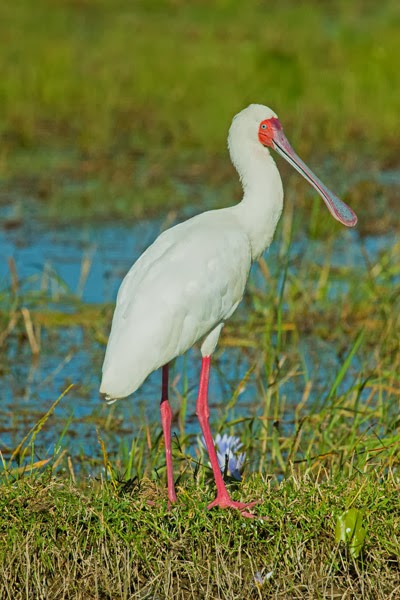
 African Spoonbill

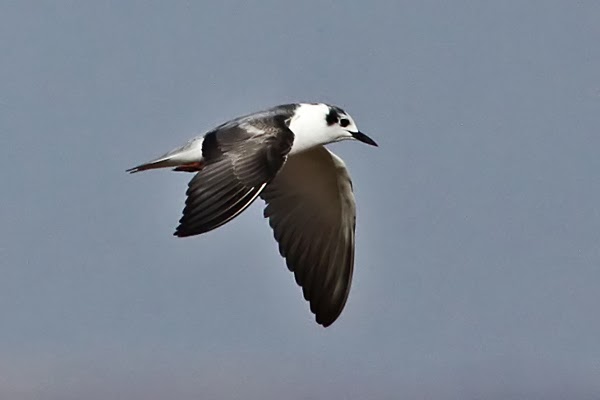
White-winged Tern

We have another Avian Adventures tour to Ethiopia planned for later this year.  Details are on the website.
.

Monday, 23 December 2013

Avian Adventures tour in Ethiopia

Here are just a few photographs from the recent Avian Adventures tour in Ethiopia.  It's pleasing to report that the accommodation and the food were both improved since our last tour there and we even managed to have much better weather than last time!

 Gelada - often referred to as Gelada Baboon - spends most of its time sitting eating grass. Apparently it's not really a baboon at all but it certainly looks like one.  It can only be found in Ethiopia.

 Spot-breasted Lapwing - an Ethiopian endemic, not difficult to find in the highlands above 2,500m.

Black-headed Siskin or Ethiopian Siskin - another Ethiopian endemic and common, sometimes abundant in the highlands.

Ethiopian Wolf - now listed as Endangered by the IUCN, on account of its small numbers and fragmented range. Threats include habitat loss and fragmentation, diseases and hybridisation with domestic and feral dogs.  We saw about ten of these fox-like animals, which feed mainly on rodents, notably Giant Root-rats.

Abyssinian Catbird - also an Ethiopian endemic, its song is reminiscent of a Nightingale and it looks somewhat like a Grey Catbird of North America but is no relation.

Stresemann's Bush-crow or Ethiopian Bush-crow - also endemic to Ethiopia and in some ways the country's star bird.  It's confined to a very small area but within that area is quite common.  It bears a striking resemblance Clark's Nutcracker.   

We have another tour to Ethiopia scheduled for December 2014.

More photographs later.


Monday, 19 December 2011

Ethiopia - Part 3

South of Addis Ababa the main road passes through the Central Rift Valley and close to a succession of lakes that are of major importance for resident birds and for Palearctic and Afrotropical migrants.

Pied Kingfisher - common around most of the lakes.

Egyptian Geese - seen most days of the tour.

We were able to visit Lakes Cheleleka, Hora, Ziway, Langano and Awassa and made brief stops at others when we were travelling.

Although wetland birds were the main focus, the lakes are surrounded by bird-rich savannas and forest and the diversity of species was impressive.

Fields of vegetables at Lake Cheleleka come as a surprise to the first-time visitor expecting to find Ethiopia a country of famine and drought.

Fishing at Lake Awassa attracts pelicans, cormorants, egrets, gulls and terns.

Roosting Slender-tailed Nightjars were easy to find in the grounds of our hotel at Lake Langano.

One of several Greyish Eagle-Owls that we saw, this one was at Lake Langano.

This much bigger Verreaux's Eagle-Owl and its mate were being mobbed by Fan-tailed Ravens.

Greenshank, one of the many wader species wintering around the lakes.

African Pygmy-geese at Lake Ziway; they are attractive little birds but are they geese or ducks?

Western Reef Egrets are mainly coastal and this one at Lake Hora was the only one we saw. It had us thinking about those apparent hybrids we see around Tavira.

Superb Starling - common and widespread.

Masked Shrike, a species that we had seen before only in Lesvos. We saw 18 species of shrikes, bush-shrikes, boubous, etc in Ethiopia.

More from Ethiopia soon...

Monday, 12 December 2011

Ethiopia - Part 2

After arriving in Addis Ababa on an overnight flight from Heathrow we spent most of our first day in Ethiopia travelling north to Debre Libanos. Yellow-billed Kites, Pied Crows and Dusky Turtle Doves were among the first birds seen.

Erlanger's Lark

Our route took us across the Sululta Plain, undulating plateau grassland with frequent opportunities to stop for roadside birding. New and unfamiliar birds appeared one after the other! Many of them such as Wattled Ibis, Thick-billed Raven, Brown-rumped Seedeater and White-collared Pigeon would prove to be common but at this point they were just as exciting as Erlanger’s Lark and Long-billed Pipit which we saw only today. There was disappointment for those who missed seeing a Rüppell’s Robin-Chat, not knowing how many more we were going to see over the next two weeks.

We paused for lunch in the town of Sululta and for some of us this provided an early opportunity to sample the local staple, injera. It has to be said that it wasn’t wildly popular, being likened by those who tried it to foam-rubber carpet underlay! Soon we would get used to scouring menus for ‘safe’ alternatives! Omelette anyone?

Red-breasted Wheatear

By the time we reached the Ethio-German Park Hotel at Debre Libanos we had seen our first Egyptian and White-backed Vultures, Black-winged Lapwings, White-winged Cliff Chat, Pied, Isabelline and Red-breasted Wheatears, Groundscraper Thrush and lots of Moorland Chats.

Groundscraper Thrush

White-winged Cliff Chat

Lammergeier

Rüppell's Griffon

The hotel is wonderfully situated, perched on the cliff top overlooking the Jemma Valley. In no time we were standing outside watching Lammergeier, Rüppell’s Vultures, Tawny Eagle and Fan-tailed Raven soaring at eye level plus a distant Verreaux’s Eagle; Tacazze and Variable Sunbirds were an added distraction.

Tawny Eagle

Gelada

When we started birding the following morning it was cold with a stiff breeze, a reminder that we were at 2,400 metres above sea level. Erckel’s Francolin, Rüppell’s Black Chat, White-billed Starling and Ethiopian Cisticola were just some of our target species that were found quite easily close to the hotel. We also came across a troop of Geladas, grass-grazing primates that look like and are obviously closely related to baboons and which occur only in the Ethiopian highlands.

We had just a one-night stay in Debre Libanos and then returned to Addis. Next we would be heading for the Rift Valley lakes…

Thursday, 8 December 2011

Ethiopia - Part 1

We’ve just returned from a two-week tour in Ethiopia, a country we’d been wanting to visit for quite some time. We’re pleased to say that it didn’t disappoint - quite the opposite in fact!

Spot-breasted Lapwing

When we’ve mentioned Ethiopia in the past it’s been clear that many people have come to think of it simply as a country of famine, desert and drought. Such is the power of television! The fact is that about half of the country, the central plateau where the vast majority of the people live, is extremely fertile and enjoys quite a pleasant climate that includes plenty of rain. The economy is based largely on agriculture and the country is a major producer and exporter of coffee. There is spectacular scenery with mountains rising to more than 4,000 metres, rivers, gorges, many lakes and a great diversity of habitats for wildlife.

Jemma River Gorge, Debre Libanos

Awash River

Covering more than 1.1 million square kilometres Ethiopia is a big country (more than twice the size of Spain) and during our short visit, even though we probably spent more time than we would have liked travelling, we were able to see only a relatively small part of it.

Most tourists go to Ethiopia to see the many historical sites, the rock-hewn churches, the castles and the monasteries: it goes without saying that we were there for the wildlife, mainly the birds.

Blue-winged Goose - one of the easiest endemics to see

Just how many birds have been recorded in Ethiopia isn’t an easy question to answer. Likewise, it’s difficult to be precise about how many endemic species there are. Research the regular internet websites and you will find a variety of conflicting figures. Partly, of course, these differences result from varying approaches to splitting and lumping, the nightmare that is currently avian taxonomy! The African Bird Club has the total as 816 species and lists 14 as endemic and another 17 as near-endemic.

The latest estimate of the country’s population that we have been able to find is 90.8 million and with 46.3% of those being under the age of 15 years it’s clear that this figure is set to rise steeply. Habitat destruction, overgrazing and deforestation are already very evident and it is difficult to see how the situation can become anything other than considerably worse.

Haile Gebrselassie

The country is famous for producing athletes, mostly long distance runners. Ask most people to name a famous living Ethiopian and the betting is that the name Haile Gebrselassie will be amongst the first to be mentioned. Olympic gold medallist and possibly the greatest distance runner of all time, Haile Gebrselassie is also a highly successful and wealthy businessman and it was remarkable that this national hero was one of the first people we saw when we arrived at Bole International Airport in Addis Ababa. Even more remarkable was that we bumped into him again the next day 100 kilometres further north at Debre Libanos where he was filming a television commercial and we were looking for the endemic Rüppell’s Black Chat. What a nice guy!

Look out for more from our Ethiopian adventure shortly…